Showing posts with label humility. Show all posts

Monday, December 07, 2009

A GODLY MAN IS A HUMBLE MAN
...by Thomas Watson

Question: How may a Christian know that he is humble and consequently godly?

Answer 1: A humble soul is emptied of all swelling thoughts of himself. Bernard calls humility a self-annihilation. `Thou wilt save the humble' (Job 22:29). In the Hebrew it is `him that is of low eyes'. A humble man has lower thoughts of himself than others can have of him. David, though a king, still looked upon himself as a worm: `I am a worm, and no man' (Psa. 22:6). Bradford, a martyr, still subscribes himself a sinner. `If I be righteous, yet will I not lift up my head' (Job 10:15) – like the violet which is a sweet flower, but hangs down the head.

Answer 2: A humble soul thinks better of others than of himself: `let each esteem other better than themselves' (Phil. 2:3). A humble man values others at a higher rate than himself, and the reason is because he can see his own heart better than he can another's. He sees his own corruption and thinks surely it is not so with others; their graces are not so weak as his; their corruptions are not so strong. `Surely', he thinks, `they have better hearts than I.' A humble Christian studies his own infirmities and another's excellences and that makes him put a higher value upon others than himself. `Surely I am more brutish than any man' (Prov. 30:2). And Paul, though he was the chief of the apostles, still calls himself `less than the least of all saints' (Eph. 3:8).

Answer 3: A humble soul has a low esteem of his duties. Pride is apt to breed in our holy things as the worm breeds in the sweetest fruit and froth comes from the most generous wine. A humble person bemoans not only his sins but also his duties. When he has prayed and wept, `Alas,' he says, `how little I have done! God might damn me for all this.' He says, like good Nehemiah, `Remember me, 0 my God, concerning this also, and spare me' (Neh. 13:22). `Remember, Lord, how I have poured out my soul, but spare me and pardon me.' He sees that his best duties weigh many grains too light; therefore he desires that Christ's merits may be put into the scales. The humble saint blushes when he looks at his copy. He sees he cannot write evenly, nor without blotting. This humbles him to think that his best duties run to seed. He drops poison upon his sacrifice. `Oh,' he says, `I dare not say I have prayed or wept; those which I write down as duties, God might write down as sins.'

Answer 4: A humble man is always preferring bills of indictment against himself. He complains, not of his condition, but of his heart. `Oh, this evil heart of unbelief!'

'Lord,' says Hooper, `I am hell, but thou art heaven.' A hypocrite is for ever telling how good he is. A humble soul is for ever saying how bad he is. Paul, that highflown saint, was caught up into the third heaven, but how this bird of paradise bemoans his corruptions! `0 wretched man that I am! . . . ' (Rom. 7:24). Holy Bradford sub-scribes himself, `the hardhearted sinner'. The more know-ledge a humble Christian has, the more he complains of ignorance; the more faith, the more he bewails his unbelief.

Answer 5: A humble man will justify God in an afflicted condition: `Howbeit thou art just in all that is brought upon us' (Neh. 9:33). If men oppress and calumniate, the humble soul acknowledges God's righteousness in the midst of severity: Lo, I have sinned' (2 Sam. 24:17). `Lord, my pride, my barrenness, my sermon surfeiting have been the procuring cause of all these judgments.' When clouds are round about God, yet `righteousness is the habitation of his throne' (Psa. 97:2).

Answer 6: A humble soul is a Christ-magnifier (Phil. 1:20). He gives the glory of all his actions to Christ and free grace. King Canute took the crown off his own head and set it upon a crucifix. So a humble saint takes the crown of honour from his own head and sets it upon Christ's. And the reason is the love that he bears to Christ. Love can part with anything to the object loved. Isaac loved Rebekah and he gave away his jewels to her (Gen. 24:53). The humble saint loves Christ entirely, therefore can part with anything to him. He gives away to Christ the honour and praise of all he does. Let Christ wear those jewels.

Answer 7: A humble soul is willing to take a reproof for sin. A wicked man is too high to stoop to a reproof. The prophet Micaiah used to tell King Ahab of his sin, and the King said, `I hate him' (I Kings 22:8). Reproof to a proud man is like pouring water on lime, which grows the hotter. A gracious soul loves the one who reproves: `rebuke a wise man, and he will love thee' (Prov. 9:8). The humble-spirited Christian can bear the reproach of an enemy and the reproof of a friend.

Answer 8: A humble man is willing to have his name and gifts eclipsed, so that God's glory may be increased. He is content to be outshone by others in gifts and esteem, so that the crown of Christ may shine the brighter. This is the humble man's motto: `Let me decrease; let Christ increase.' It is his desire that Christ should be exalted, and if this is effected, whoever is the instrument, he rejoices. `Some preach Christ of envy' (Phil. 1:15). They preached to take away some of Paul's hearers. `Well,' says he, `Christ is preached; and I therein do rejoice' (v.18). A humble Christian is content to be laid aside if God has any other tools to work with which may bring him more glory.

Answer 9: A humble saint likes that condition which God sees best for him. A proud man complains that he has no more; a humble man wonders that he has so much: `I am not worthy of the least of all thy mercies' (Gen. 32:10). When the heart lies low, it can stoop to a low condition. A Christian looking at his sins wonders that it is no worse with him; he does not say his mercies are small, but his sins are great. He knows that the worst piece God carves him is better than he deserves; therefore he takes it thankfully upon his knees.

Answer 10: A humble Christian will stoop to the meanest person and the lowest office; he will visit the poorest member of Christ. Lazarus' sores are more precious to him than Dives' purple. He does not say, `Stand by, come not near to me, for I am holier than thou' (Isa. 65:5), but `condescends to men of low estate' (Rom. 12:16).

[From The Godly Man's Picture by Thomas Watson, Section II,
a Puritan Paperback edition published by the Banner of Truth.]

Thursday, June 18, 2009

THE SWORD AND THE TROWEL
...Geese in Their Hoods

by C.H. Spurgeon

N the frequent quarrels between the priests and monks of the Church of Rome, the two parties of rogues were silly enough to expose each other's villainies. On the edifices belonging to monasteries, priests were caricatured in the stonework; and on the churches built by priests, the monks and friars were held up to ridicule. A great deal of real truth was thus brought out by their mutual recriminations. The ancient carving above is a specimen of a common caricature representing the clergy as foxes with geese in their hoods; a very admirable picture whether monks or priests were intended. Popery, with its secret confessional and priestly interference at dying beds, is essentially a fox. Puseyism, pretending to be Protestant, and gradually bringing in all the foolery of Rome, is a deep fox indeed. Yet there are geese silly enough to be deceived by priests in this nineteenth century; and so long as the supply of such geese is kept up, the foxes will never cease to prowl.

Reader, do you believe that men like yourself have priestly power? Do you think that they can regenerate infants by sprinkling them, and turn bread and wine into the very body and blood of Jesus Christ? Do you think that a bishop can bestow the Holy Ghost, and that a parish clergyman can forgive sins ? If so, your head can be seen in the picture peeping out from the cowl of the fox. You are the victim of crafty deceivers. Your soul will be their prey in life and in death. They cajole you with soft words, fine vestments, loud pretensions, and cunning smiles, but they will conduct you down to the chambers of death, and lead you to the gates of hell. Silly goose, may grace make thee wise!

Jesus Christ is the true Priest who can forgive all your sins; go to him at once, without the intervention of these pretenders. Make confession to him! Seek absolution from him! The Holy Ghost alone can cause you to be born again, and the grace of God alone can bring you to glory. Avoid Puseyite and Romish foxes, for they seek to make a gain of you, and lead you not to Jesus, but to their Church and all its mummeries.

Believe in the Lord Jesus Christ, and not in these deceivers.

Tuesday, May 05, 2009

THE SWORD AND THE TROWEL
...variety, the rule of grace

by C.H. Spurgeon

MANY persons are greatly disquieted in mind because their experience of conviction or comfort has not been like that of others. They fancy that they cannot have come to Christ aright because they have not felt precisely the same joys or expressions as certain saints of whom they have read. Now, should these good people be so troubled? We think not. Uniformity is not God's rule of working either in nature or in grace. No two human faces display exactly the same lineaments; sons of the same mother, born at the same birth, may be as different as Jacob and Esau. Not even in leagues of forest will two leaves be found in all respects alike. Diversity is the rule of nature, and let us rest assured that variety is the rule of grace.

Mr. Beecher has given us this truth in a very beautiful form in the following lines:
"What if God should command the flowers to appear before him, and the sunflower should come bending low with shame because it was not a violet, and the violet should come striving to lift itself up to be like a sunflower, and the lily should seek to gain the bloom of the rose, and the rose the whiteness of the lily; and so, each one disdaining itself, should seek to grow into the likeness of the other?" God would say, 'Stop foolish flowers! I gave you your own forms and hues, and odours, and I wish you to bring what you have received. O, sunflower, come as a sunflower; and you sweet violet, come as a violet; let the rose bring the rose's bloom, and the lily the lily's whiteness.' Perceiving their folly, and ceasing to long for what they had not, violet and rose, lily and geranium, mignionette and anemone, and all the floral train would come, each in its own loveliness, to send up its fragrance as incense, and all wreathe themselves in a garland of beauty about the throne of God."
Reader, the saints are one in Christ Jesus, but they are not one in their peculiarities. Be we who we may, if we rest on the Redeemer our eternal life is sure; and if not, we are dead while we live. What is Jesus Christ to me? that is the main question. If he is my all, then all is well; if not, I may be very like a saint, but a saint I am not.

Friday, March 27, 2009

THE HUMILIATION OF CHRIST
born under the law, took the form of a slave, became obedient unto death on a cross, and propitiated the wrath of God

CHRISTOLOGY: all theology, all doctrine, all preaching should point to Him

"...the prism through which all light concerning God is reflected is Jesus Christ. This means that Christology is the beginning and the end, better, the starting point and summary, of all Christian thought. Christology is Paul's theme when he writes, "For it is the very God who said. 'Let light shine out of darkness,' who has shone in our hearts to give the light of the knowledge of the glory of God in the face of Christ." (2 Cor 4:6)... Christology is the subject of theology. More precisely put, Jesus Christ is the subject of theology.

We understand that God in any sense differentiated from Jesus Christ is unknowable. This needs to be affirmed from the start. John writes in the prologue to his Gospel, "No one has ever seen God; the only Son, who is in the bosom of the Father, he has made him known" (1:18). John repeats this idea forcefully in his first letter: "No one has ever seen God" (4:12)... Bible religion knows nothing about a God who can be found or made out from our side of things... Theology is unable to start in 
those places [first cause, ground of our being] because the picture of God that emerges from such beginnings is speculative... 

A theology that is Christology before it is anything else is a theology from the bottom up. It begins with the ministry of Jesus in his own time and space, and it states that it is entirely agnostic concerning anything other than what he has given us to know of the essential attributes of God... we begin, therefore, Christologically, with a concrete historic figure 
who appeared on the stage of human history..."  -Paul F.M. Zahl (A Short Systematic Theology)


The Shorter Catechism as expounded by John Flavel on the humiliation of Christ
Q. 27. Wherein did Christ’s humiliation consist?
A. Christ’s humiliation consisted in his being born, and that in a low condition, made under the law, undergoing the miseries of this life, the wrath of God, and the cursed death of the cross; in being buried, and continuing under the power of death for a time.
Q. 1. What doth Christ’s humbling of’ himself import?
A. His voluntariness in the deepest point of self-denial? Psalm 40:7. Then said I, Lo, I come; in the volume of the book it is written of me.

Q. 2. What was the first act of Christ’s humiliation?
A. His taking man’s nature on him, with all its sinless infirmities; Romans 8:3. God sending his own Son in the likeness of sinful flesh, and for sin condemned sin in the flesh.

Q. 3. What is the second part of his humiliation?
A. That mean life he lived in this world, which obscured his divine glory; Mark 6:3. Is not this the carpenter, the son of Mary?

Q. 4. What was the first thing in Christ’s life that humbled him?
A. The poverty of it; Matthew 7:20. And Jesus saith unto him, the foxes have holes, and the birds of the air have nests; but the Son of man hath not where to lay his head.

Q. 5. What was the second thing in his life that humbled him?
A. The temptations of Satan, to which he was subject; Matthew 4:1. Then was Jesus led up of the Spirit into the wilderness, to be tempted of the devil, and that for our sakes. Hebrews 2:17-18. Wherefore in all things it behoved him to be made like unto his brethren. For in that he himself hath suffered, being tempted, he is able to succour them that are tempted.

Q. 6. What was the third thing in Christ’s life that humbled him?
A. His subjection to the law; Galatians 1:4. But when the fulness of’ the time was come, God sent forth his Son, made of a woman, made tinder the law.

Q. 7. What was the fourth thing in Christ’s life that humbled him?
A. The revilings and contradictions of’ sinners; Hebrews 12:3. For consider him that endureth such contradiction of sinners against himself.

Q. 8. Wherein was Christ humbled in his death?
A. His death was painful and ignominious; Galatians 3:13. Christ bath redeemed us from the curse of the law, being made a curse for us: For it is written, cursed is every one that hangeth on a tree. Made a curse for us, and deserted in it; Matthew 27:46. And about the ninth hour, Jesus cried with a loud voice, saying, Eli, Eli, lama sabacthani; that is to say, My God, My God, why hast thou forsaken me?

Q. 9. What is the first inference from hence?
A. That lowliness and humility becomes Christ’s followers; Matthew 11:29. Take my yoke upon you, and learn of me, for I am meek and lowly in heart.

Q. 10. What is the second inference?
A. That Christ’s love to sinners is astonishingly great; 2 Corinthians 8:9. For ye know the grace of’ our Lord Jesus Christ, that though he was rich, yet for our sakes he became poor, that ye through his poverty might he made rich.

Q. 11. What is the third inference?
A. Christians should be ready to suffer for Christ; 1 Peter 4:1. Forasmuch as Christ hath suffered for us in the flesh, arm yourselves likewise with the same mind: fi)r he that hath suffered in the flesh hath ceased from sin.

Q. 12. What is the last inference?
A. That humiliation is the true way to exaltation; Matthew 23:12 And whosoever shall exalt himself, shall be abased; and lie that shall humble himself, shall be exalted.

Thursday, January 08, 2009

LEARNING TO TRUST GOD EACH DAY
...the gracious gift of humility in how the Lord meets our need


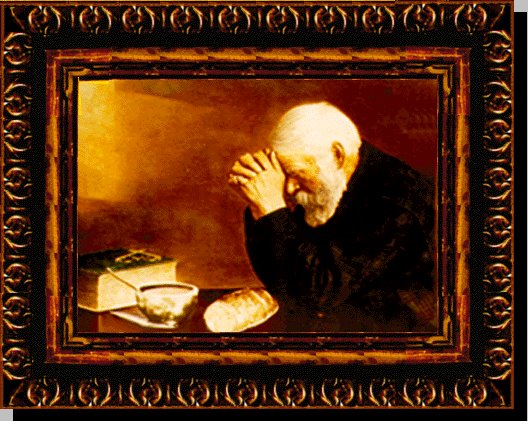
“Give us this day our daily bread.” –Matthew 6:11


When was the last time we really had to pray this humble prayer; asking the Lord to provide “daily bread” for our life? Seems almost insignificant in the times we live with a McDonald’s on almost every street corner and supermarkets overflowing. But the reality is that most of us are just one paycheck away before the well runs dry. The point of this prayer is simple and profound: we can never take God’s provision for granted; we are utterly dependent on Him for all things; and without Him, we can do nothing. Everything that we have is from His gracious hand.

Listen to what A.W. Pink says about this truth:

“By asking for our “daily bread” a tacit acknowledgment is made that “in Adam and by our own sins we have forfeited our right to all the outward blessings of this life, and deserve to be wholly deprived of them by God, and to have them cursed to us in the use of them; and that neither they of themselves are able to sustain us, nor we to merit, or by our own industry to procure them, but prone to desire, get and use them unlawfully; we pray for ourselves and others that they and we, waiting upon the providence of God from day to day, in the use of lawful means, may of His free gift, and as His Fatherly wisdom shall deem best, enjoy a competent portion of them, and have the same continued and blessed unto us in our holy and comfortable use of them and contentment in them” (Larger Cat.)

Beloved, is the cubbard bare today? Are funds scarce and the resources for daily living almost gone? Then take heart and may this day be filled with the wonderful opportunity to trust the Lord afresh for even the most basic necessities of life. Rejoice in His marvelous providential supply for you as He puts His sufficient grace on display; for our God shall"supply all our needs according to the riches in glory that are in Christ Jesus."

Feast on the Word of God: Jer. 15:16; Job 23:10-12; Isaiah 37; Psalm 103; Matt. 6:25-34; Phil. 4:13ff; Col. 1:9-14.

Wednesday, October 15, 2008

YOUR ARMS ARE TOO SHORT TO BOX WITH GOD
...the creature does not counsel the Creator


Read Ephesians 1:4-14 to see the foundation of the Word of God in these powerful words below:

"For it is utterly impossible that any finite cause, created power, or anything out of God himself, should primarily move and incline the eternal, immutable, uncreated, omnipotent will of God. The true original and prime motive of all gracious, bountiful expressions and effusions of love upon his elect, is the good pleasure of his will. And therefore to hold that election to life is made upon foresight of faith, good works the right use of free will, or any created motive, is not only false and wicked, but also ignorant and absurd tenet. To say no more at this time, it robs God of his all-sufficiency, making him go out of himself, looking to this or that in the creature, upon which his will may be determined to elect." -ROBERT BOLTON

Thursday, July 31, 2008

BATTLES IN THE BLOGOSPHERE
...when conflicts arise, how should we respond and work towards resolve?

When we are wronged, spoken falsely about, our character maligned and reputation smudged, how should we as Christians respond? What does the Word of God teach about this, especially when it comes to the arena of blogging?

There has been an issue of late where a dear man of God, Ken Silva, and his website were forced to go dark because of one complaint lodged against him by another blogger. This other blogger claimed he was slandered by Ken; IMHO, after reading all the documents I could find, he wasn't. This other blogger made a few mistakes: he never contacted Ken directly; he did not follow biblical guidelines for resolve; and he tried to deal with this by reporting Ken to an easily intimated web hosting company of his blog. The next thing you know, Ken's site is gone - sent to electron heaven.

I posted a comment about this on the blogger in question's website asking him to state specifically what the offense was and the words Ken used to describe him that he thought were slanderous. Not only did he not answer my polite and reasonable question, he deleted my comment. After a few other comments, he then closed comments on his thread.

As many of you know, I have had many bloggers say the most outrageous, egregious, and untrue statements about myself and my theology for years. Some do it with an unbridled reckless abandon as if they were a character in a comic book or something. Some react without thinking and are just plain foolish. Some do it to elevate their own self-worth. Some do it because I have challenged them biblically and out of embarrassment in not being able to defend their skewed theology... attack. And then some, in a godly attitude with cogent and meaningful dialogue say strong things because they were right and I needed to see another side of an issue. Regardless, whether from good or bad motives, I am grateful for all of it for the Lord has used it and continues to use it to conform me to Himself. Though I have to admit I have had my share of tears shed and sleepless nights over some of the very ugly commentary directed at me. On occasion, my own attorney would very much like "to minister" to some of these amateur journalists and theologues clothed in blogging rags, but I have instructed him otherwise. It doesn't serve the gospel or the ministry of God's Word to do so... does it? As my dear friend, Dr. John MacArthur, told me years ago, "don't spend your time defending yourself Steve. If you do, you will do nothing else. Defend the Word of God and His gospel and let the Lord take care of others and their opinions of you. Be teachable and thank the Lord for even their unkind and untrue words. Your reputation is not what is ultimately important, God's glory is." Great advice that I try to honor by God's grace.

So how should conflict about message and messenger biblically be handled in the blogosphere? Here are a few thoughts that I hope will prove helpful and be an encouragement to you.

1. Go to your brother privately
If there is an offense between two people of a personal nature, the offended one or the one doing the offending has the biblical duty to go to each other and to do so without delay. They should seek a quick and godly resolve. Hear the words of our Lord Jesus:
"So if you are offering your gift at the altar and there remember that your brother has something against you, leave your gift there before the altar and go. First be reconciled to your brother, and then come and offer your gift. Come to terms quickly with your accuser while you are going with him to court, lest your accuser hand you over to the judge, and the judge to the guard, and you be put in prison." -Matthew 5:23-25

2. Church discipline
If an offense or sin occurs between two believers in the Lord, they are first to go to each other and try to win their brother. If that one on one process fails, then they are to take two or three witnesses to confirm what has happened. Within these witnesses should be a pastor or elder of your church. If the party in sin doesn't "hear them" - meaning resolve the matter, then it is to be told to the church. This is not for revenge or retribution, but for repentance, reconciliation and resolve. Lastly, if the party in sin does not repent, then they are to be treated as a nonbeliever. Treated as such, not declared as such, but treated as such. So many people in a rush to judgment will declare someone is not saved and that is not the meaning nor the spirit of church discipline. How do you treat a nonbeliever? With respect, with Christlike love, with humility, and with boldness proclaiming the gospel to them. IOW, continually, lovingly, and with grace, respect and humility give them the gospel and call them to repentance to follow Christ. BTW, the only sin anyone is ever treated as a nonbeliever for is for lack of repentance. Whatever the offense might be, if they repent, all is forgiven and restoration may occur. This is one reason why commitment to a local church is so important. It is a protective and a proactive way to deal with sin and conflict and wrongs that can surface with other believers.

Listen to the words of Jesus:
“If your brother sins against you, go and tell him his fault, between you and him alone. If he listens to you, you have gained your brother. But if he does not listen, take one or two others along with you, that every charge may be established by the evidence of two or three witnesses. If he refuses to listen to them, tell it to the church. And if he refuses to listen even to the church, let him be to you as a Gentile and a tax collector. Truly, I say to you, whatever you bind on earth shall be bound in heaven, and whatever you loose on earth shall be loosed in heaven. Again I say to you, if two of you agree on earth about anything they ask, it will be done for them by my Father in heaven. For where two or three are gathered in my name, there am I among them.” -Matthew 18:15-20
3. Protect the unity of the Spirit in the bond of peace
The Apostle Paul says,
"I therefore, a prisoner for the Lord, urge you to walk in a manner worthy of the calling to which you have been called, with all humility and gentleness, with patience, bearing with one another in love, eager to maintain the unity of the Spirit in the bond of peace." -Ephesians 4:1-3
After three great chapters of doctrine and theology, Paul begins the last three chapters as to the responsibility of our redemption in the Lord Jesus Christ. His command? Walk worthy to your calling. Where is this first evidenced? In the local church with other believers. And how is this manifested? With humility: (a small opinion of ourselves and a high view of God); gentleness: (taking the mistreatment, injustice and wrongs against us free from revenge, malice and retribution accompanied by doing acts of kindness to the very ones causing the offense trusting in God through it all in how He uses that situation to conform us to Christlikeness. It is the surrender of our rights.); patience: (endurance in the provocation until the healing comes.); and bearing with one another in love: (keeping the greater goal of our testimony in the Lord chief even while being misused by another.

IOW, live and walk in forgiveness and unfailing love. This takes grace for we are not strong enough to do this in and of ourselves.

4. Lastly, why not rather be wronged?
The Apostle Paul gives very clear instruction about how not to handle grievances with other believers in the Lord. Lawsuits are strictly forbidden. And in the case of the blogosphere, pursuing legal action, even if the case is not civil, to resolve a wrong is forbidden. "It is the glory of a man to overlook an offense" (Proverbs 19:11). "Love covers a multitude of sins" (1 Peter 4:8); IOW, it protects the scope of who has knowledge of another's failings. And we should demonstrate that kind of love not only to fellow believers in the Lord, not only to our neighbors, but to our enemies as well (Matt. 5:40-44).

Listen to Paul's strong and stern words for the church at Corinth:
When one of you has a grievance against another, does he dare go to law before the unrighteous instead of the saints? Or do you not know that the saints will judge the world? And if the world is to be judged by you, are you incompetent to try trivial cases? Do you not know that we are to judge angels? How much more, then, matters pertaining to this life! So if you have such cases, why do you lay them before those who have no standing in the church? I say this to your shame. Can it be that there is no one among you wise enough to settle a dispute between the brothers, but brother goes to law against brother, and that before unbelievers? To have lawsuits at all with one another is already a defeat for you. Why not rather suffer wrong? Why not rather be defrauded? But you yourselves wrong and defraud—even your own brothers! -1 Corinthians 6:1-8
Bringing it home
How does this effect us in the blogosphere, and in specific, how would one respond to the unfortunate incident brought against our brother Ken recently?

If someone writes an article about us where we feel we might have been mischaracterized, misrepresented or even slandered, go to that person first and settle it there. If still no resolve, go to your local pastor and have him handle this within the local church where he may even have to go and meet with another church on your behalf. Let us do all that we can as much as it depends on us to be at peace with all men (Roms. 12:18); especially those within the household of faith endeavoring to keep the unity of Spirit in the bond of peace. Lastly, if persistent God-honoring communication fails to produce resolve, you can trust the Lord and say it is better that I am wronged than I pursue my rights to be right and bring fracture and harm to the body of Christ. Your witness for the gospel and your life representing the Lord Jesus is more important than you being vindicated.

Some tips to help guard against slander and libel:
1. Speak the truth
2. Do your homework and research well; don't just vent, study to be approved
3. Document well and link accurately to corroborate your views
4. Develop your post and conclusions from the Word of God
5. Don't make it personal, stay on message
6. Check motives and be willing to immediately correct any wrongs
7. Debate, discuss, and dialogue; don't defame
Beloved, this little vaporous life we live here is not ultimately about us, it is all about Him and His glory. Living in forgiveness and Christlike love doesn't condone wrongs against us or minimize their impact or consequences. But it does mean we will be free from causing needless conflict, free from bitterness, anger, wrath, clamor and slander. Our little reputations and carefully cultivated bios are not what is the chief concern here.

Are we honoring God's Word? Are we willing to give up our rights to glorify Him? Is a blog worth dividing the body of Christ or protecting our wounded egos?

SDG

Tuesday, June 17, 2008

THE RIGHT TO BE WRONGED
...learning to trust God in the tough issues of life

-this is an encore presentation-

My mom is famous for her timely, pointed, pithy words of wisdom. One of those perceptive perspectives that has never left my thinking is this, "You have one right, Steve, as a Christian, and that's to have no rights." The truths of those words still ring profound today. I completely agree with her with one slight modifier - we do have the right to be wronged (1 Cor. 6:1-8).

Being in music ministry for over 30 years you hear all matters of talk about artists, authors, evangelical leaders - those who control the publishing and music industry of religious content, etc. this is a given. And now add to this mix the blogosphere; where anyone with a keyboard can become an excerpt on most anything just because they post - never mind if they are qualified to speak. Blogging daily and interacting with many in the blogosphere can be a place of real blessing. Sometimes it brings out excellent times for genuine ministry and discussion to take place and other times, all it yields is sorely behavior, name-calling, insinuations, ill-treatment, and unsupported-wide-eyed assertions from those that "think they are in the know." I have found that even when you are not responding to their childish rants, they will still rant about you or anyone who challenges them or disagrees with them. Soon, people are afraid to really express themselves honestly for fear of being vilified publicly. And for what? Just for offering another side to the proverbial coin. It is a godly exercise beloved to not respond with insult for insult; better to remain silent. It won't silent them, but you will be better for it and others will see this. Better to pray for them, and to learn again to die to yourself. I have been learning this again lately; and despite the less than Christian comments of others, I am blessed in God's providence to be in the crucible of grace being conformed to Jesus. It is not pleasant; it is painful; but all for our good and His glory. Amen?

You have to exercise practical wisdom on what you chose to believe and not believe about people and their failings; for everyone wants to feel like they have the latest word on the rumor mill. This unfortunately happens in the church too... doesn't it? What I am referring to the destructive sin of gossip; talk that has as its only purpose the determined underhanded demise of another. It is so conventional that among some Christians it could be considered a spiritual gift. Confronting eye to eye, an individual alone, is rarely if ever done in our day. Jesus' words in (Matthew 18:15-20) not just suggest, but demand you go to another privately before even uttering it to another publicly--and even then, it is to only two or three to help mend the breach. But here is the problem: we are marked by "itching ears" in our culture today; hungry for those little tidbits of juicy rumor, jealous of others, or trying to elevate yourself by constantly putting others down; rather than simply insatiably craving and living out the truth of God's Word.

THE TONGUE IS A FIRE
Have you ever been wrongly accused of something or just plain misunderstood? Have you ever had people gossip behind your back with false perceptions about your integrity or character? Have you ever biblically confronted a friend or family member in sin and been ostracized for the loving honesty? Have you ever stood for Christ in the work place and it cost you in reputation or promotion in a job? Even in the common ordinary day of our lives, it’s easy to become offended over trivial things, isn't it?. What’s worse, when we do get offended we end up savoring the bitterness, promoting ill will out of revenge to sooth our sagging pride or hurt feelings, conjuring up ways to “get even” with those who have wronged us, or possibly have spoken to others about it with no other motive or intent than to build-a-case to undermine the one who wounded us.

However, the sad and subtle quintessential way that we as Christians gossip about others behind their back is through... prayer. I call it the “gracevine.” How many times have you received a phone call, been stopped by someone in the market, or even gotten an email with something about someone that is gossip, but it is cloaked in the language of "I don't want to spread a rumor, but here is what I heard about "so and so" and I am onlyl sharing it with you so you can be praying about this person..." We are all guilty of this aren't we? I know I have. I have been both prey and perpetrator of wrongly speaking about someone else—possibly you too.

If you have ever been wronged or deeply hurt by another, what should our response be? How are we to react or most importantly… act? Paul warns against “bitterness, angry, wrath, evil speaking, clamor, and malice" from taking root in our lives (Ephesians 4:31). It grieves the Holy Spirit, causes fellowship to be broken between two believers in Christ, and a possible testimony to be scarred. Paul does exhort us to live in kindness, tenderheartedness and forgiveness with one another; "forgiving one another as God in Christ has forgiven us."

LET US CONSIDER CHRIST
Peter tells us, "when He was reviled against, He did not revile in return." When treated with scorn, beatings, and indignation "He did not retaliate." When spoken of wrongly and accused falsely of everything from being a drunkard, to the friend of sinners, to even being Beelzebub the chief of demons, "He uttered no threats." Even in the garden of Gethsemane the Lord said that He could have had twelve legions of angels (72,000 angels) at His disposal to fulfill His commands, yet He did not demand His rights, but "entrusted Himself to the One who judges justly."
""Keep about your work. Do not flinch because the lion roars; do not stop to stone the devil’s dogs; do not fool away your time chasing the devil’s rabbits. Do your work. Let liars lie, let sectarians quarrel, let critics malign, let enemies accuse, let the devil do his worst; but see to it nothing hinders you from fulfilling with joy the work God has given you. He has not commanded you to be admired or esteemed. He has not commanded you to get rich. He has never bidden you defend your character. He has not set you at work to contradict falsehood (about yourself) which Satan’s or God’s servants may start to peddle, or to track down every rumor that threatens your reputation. If you do these things, you will do nothing else; you will be at work for yourself and not for the Lord. Keep at your work. Let your aim be as steady as a star. You may be assaulted, wronged, insulted, slandered, wounded and rejected, misunderstood, or assigned impure motives; you may be abused by foes, forsaken by friends, and despised and rejected of men. But see to it with steadfast determination, with unfaltering zeal, that you pursue the great purpose of your life and object of your being until at last you can say, ‘I have finished the work which Thou gavest me to do’." -AUTHOR UNKNOWN

LIVING IT OUT THIS WEEK - CONSIDER THIS:
First, if someone approaches you to tell you something about another person this week, ask the one telling you if they have gone directly to that person first, before they sin and repeat any matter to you. If they have not done so, don't entertain their story. Walk away, run if necessary. If they are not willing to go directly to the person they're talking about, then they are not motivated by God's love for that person, and their words should be treated as suspect or disregarded completely (Proverbs 20:19).

Secondly, if you have ought against someone go to that person immediately and privately to make things right. Out of our own pride or hurt and wounded feelings we will usually try and build a case against someone else to make ourselves look better or deflect attention away from our own issues. But it is sin beloved to do so. Even if you don't harbor ill feelings against someone, but you know that they have something against you, Jesus says to leave your gift at the altar, call them and seek to be reconciled (Matthew 5:23-24).

Thirdly, remember the great debt that God in Christ has forgiven you. Because of that you can forgive someone else the lesser offense. When we have a right view of our own sinfulness and a right view of what it cost our Lord to redeem our own sin soaked lives, we then can exercise grace and walk in forgiveness with another (Matthew 18:21-35). Revenge or "payback" is never worth it. If you are in the wrong, then be quick to admit your own wrongdoing; seek to be forgiven and to forgive. If you are wrongly accused: then don't be quick to defend yourself--humility is better served by going the extra mile and bearing the insults of another. Bless those who falsely accuse you and leave them to God.

Fourthly, "If it is possible, as much as it depends on you, live peaceably with all men" (Romans 12:18). This means that to walk the worthy walk, we need to put on the godly character of longsuffering, patience, humility, gentleness, and self-sacrificial love (Ephesians 4:1-4) and put away bitterness, wrath, anger, clamor, gossip and all malice (Ephesians 4:31-32) . I don't know about you, but that takes "a work of grace" in my life to walk that kind of walk each day. IOW, extend mercy where there could be offense; extend love where there could be hate; extend grace where there could be revenge; extend peace where there could be strife; and extend prayer where there could pride. "Love your enemies, bless those who curse you, do good to them that hate you, and pray for those who spitefully use you and persecute you" (Matthew 5:40-44).

Here are some of our "rights" in Christ:
  • you have the right to turn the other cheek
  • you have the right to be misunderstood
  • you have the right to be gossiped about
  • you have the right to go the extra mile
  • you have the right to persecuted for your faith
  • you don’t have the right to bitterness
  • you don't have the right to get even
  • you don't have the right to take matters in your own hands
  • you don’t have the right to gossip about others
  • you have the right to obey the Lord and not hurt others
  • you have the right to be wronged.

“The Right to Be Wronged”
by Camp/Frazier


These are the worst of times; the best of times
Finding poetry when the words don't rhyme
Willing to surrender, to the cruelty of another
Learning to sing an unfamiliar song
Choosing not to fight, we are
Learning the right
to be wronged

You never know what a day might bring
Life's an unpredictable, twisted thing
Some days you have to turn the other cheek
But there's strength in being meek

You don't have to be a doormat you know
But revenge just cripples the soul
All our vain reputations are dust in the wind
Better to show grace; better to let them win

I'm going to lay down my rights
Going to give up this selfish fight
I will submit with all of my might
To the right of being wronged

It's not easy to live this way
But joy comes when you trust and obey
There's freedom when you embrace
The right of being wronged

It's so hard to reconcile
But love always goes the extra mile
To forgive the ones you'd rather forget
Takes humility and love, again and again

I'm going to lay down my rights
Going to give up this selfish fight
I will submit with all of my might
To the right of being wronged

It's not easy to live this way
But joy comes when you trust and obey
There's freedom when you embrace
The right of being wronged


By His Grace and for His Glory,
Steve
2 Cor. 4:5-7

Saturday, April 05, 2008

VENGEANCE IS MINE, I WILL REPAY, SAYS THE LORD
...trusting God even when it hurts


The Marks of the True Christian
Romans 12:9 Let love be genuine. Abhor what is evil; hold fast to what is good. 10 Love one another with brotherly affection. Outdo one another in showing honor. 11 Do not be slothful in zeal, be fervent in spirit, serve the Lord. 12 Rejoice in hope, be patient in tribulation, be constant in prayer. 13 Contribute to the needs of the saints and seek to show hospitality.

14 Bless those who persecute you; bless and do not curse them. 15 Rejoice with those who rejoice, weep with those who weep. 16 Live in harmony with one another. Do not be haughty, but associate with the lowly. Never be wise in your own sight. 17 Repay no one evil for evil, but give thought to do what is honorable in the sight of all. 18 If possible, so far as it depends on you, live peaceably with all. 19 Beloved, never avenge yourselves, but leave it to the wrath of God, for it is written, “Vengeance is mine, I will repay, says the Lord.” 20 To the contrary, “if your enemy is hungry, feed him; if he is thirsty, give him something to drink; for by so doing you will heap burning coals on his head.” 21 Do not be overcome by evil, but overcome evil with good.

Thursday, January 17, 2008

The Poor in Spirit
...true humility is born in the crucible of grace

"This is how one should regard us,
as servants of Christ
and stewards of the mysteries of God.
Moreover, it is required of stewards
that they be found trustworthy."
-1 Corinthians 4:1-2


The great theme song on the lips of the postmodern contemporary church today is no longer "Holy, Holy, Holy", but "Send in the Clowns."

In an age where pastors have morphed into amateurish stand-up comedians, clever raconteurs, mass-marketers of themselves, spiritual chameleons, scatological sermonizers, and biblical motivational speakers; the true man of God was once poor in spirit, broken, contrite, and found his joy and contentment in ministering the Word of God, serving the people of God, proclaiming the gospel of God, and doing all things to the glory of God.

But that has all changed today.
The tragic results of this spirit are all about us: shallow loves, hollow religious philosophies, the preponderance of the element of fun in gospel meetings, the glorification of men, trust in religious externalities, quasi-religious fellowships, salesmanship methods, the mistaking of dynamic personality for the power of the Spirit. These and such as these are the symptoms of an evil disease, a deep and serious malady of the soul. -A.W.T.


Quotes below by:
Thomas Watson
He that is poor in spirit is lowly in heart:

Rich men are commonly proud and scornful, but the poor are submissive. The poor in spirit roll themselves in the dust in the sense of their unworthiness. 'I abhor myself in dust' (Job 42:6). He that is poor in spirit looks at another's excellencies and his own infirmities. He denies not only his sins, but his duties. The more grace he has, the more humble he is, because he now sees himself a greater debtor to God.

If he can do any duty, he acknowledges it is Christ's strength more than his own.

As the ship gets to the haven
more by the benefit of the wind than the sail,
so when a Christian makes swift progress,
it is more by wind of God's Spirit
than the sail of his own endeavour.

The poor in spirit, when he acts most like a saint, confesses himself to be 'the chief of sinners'. He blushes more at the defect of his graces than others do at the excess of their sins. He dares not say he has prayed or wept. He lives, yet not he, but Christ lives in him. He labours, yet not he, but the grace of God.

Monday, November 12, 2007

Pride and Humility
...the war between vice and virtue

Pride is the most serious of sins in all of Scripture. Pride caused Adam and Eve to disobey God, sin to enter this world, and to cause all mankind to become children of wrath by nature. Pride caused Lucifer to be cast out of heaven because he tried to exalt himself above the throne of the Most High God. Pride drove Nebuchadnezzar to be stripped of his royal position and eat the grass of beasts in insanity for seven years for proclaiming: "this is the Babylon that I have built, by my might, and my power, for my glory." Pride made Herod believe his own press release that he had "not the voice of a man, but the voice of a god." And he fell over, was eaten by worms and died for he failed to give God glory. And my friends, pride will bring us low as well. It will cause us to forget our Lord and dishonor His Word. Pride will find sweet solace in wounding others. Pride will split churches, destroy families, cripple ministry, and forfeit God's blessing. Pride seeks and relishes the demise of others. Pride fans the flame of self-importance and with a malicious spirit rejoices in crushing ones neighbor. Pride puts down another in order to lift self up. Pride seeks only the advantage of self. Pride's first impulse is not to serve, but to be served. And pride cherishes unforgiveness and savors revenge.

Humility, however, is the daily surrender of our will to the submission of God’s will so that we may live pleasingly to Him and in right relationship with others in every circumstance and area of our lives. It is the purposeful yielding of ourselves to the Lordship of Christ. It is unqualified obedience to the truth of God. It is the unremitting state of being humble. Humility is quick to confess sin and seek repentance and restoration. It is being a living sacrifice. It is the broken and contrite heart, the broken spirit in which God is not despised. It is an all-inclusive dependence upon the Lord for all things pertaining to life and godliness. It is the denunciation of self-sufficiency, self-fulfillment, and self-aggrandizement. It is loving the Lord your God with all your heart, soul, mind and strength. Humility is counting all things as rubbish except knowing Christ Jesus the Lord. It is denying yourself, taking up your cross and following Christ. It is not loving your life, even unto death. It is embracing the right to be wronged; free from retaliation, revenge and retribution. It is blessing those who curse you, praying for those who mistreat you, doing good to those that hate you. It is loving your enemy. It is to giving up all rights to us so that God may be glorified in all things. It is selflessness. It is treating the eternal as preeminent; and the temporary as modest. It is a high view of God and a low view of ourselves.

I pray the following words will encourage us all to daily guard against the pride of man; and with a whole heart to pursue the humility of Christ.

His Unworthy Servant in His Unfailing Love,
Steve
Jer. 9:23-24


Pride:
"Pride is self contending with God for preeminence."
-CHARLES BRIDGES

"A proud faith is as much a contradiction as a humble devil." -STEPHEN CHARNOCK

"Pride is the shirt of the soul, put on first and put off last." -GEORGE SWINNOCK

Job 35:12 “There they cry out, but He does not answer because of the pride of evil men.

Prov. 8:13 “The fear of the LORD is to hate evil; pride and arrogance and the evil way and the perverted mouth, I hate.

Prov. 11:2 When pride comes, then comes dishonor, but with the humble is wisdom.

Prov. 16:5 Everyone who is proud in heart is an abomination to the LORD;

Prov. 16:18 Pride goes before destruction, and a haughty spirit before stumbling.

Prov. 29:23 A man’s pride will bring him low, but a humble spirit will obtain honor.

Dan. 4:37 “Now I, Nebuchadnezzar, praise, exalt and honor the King of heaven, for all His works are true and His ways just, and He is able to humble those who walk in pride.”

James 4:6 But He gives a greater grace. Therefore it says, “GOD IS OPPOSED TO THE PROUD, BUT GIVES GRACE TO THE HUMBLE.”

1 Pet. 5:5 You younger men, likewise, be subject to your elders; and all of you, clothe yourselves with humility toward one another, for GOD IS OPPOSED TO THE PROUD, BUT GIVES GRACE TO THE HUMBLE.

1 John 2:16 For all that is in the world, the lust of the flesh and the lust of the eyes and the boastful pride of life, is not from the Father, but is from the world.


Humility:
"The meek man will attain a place of soul rest. As he walks on in meekness he will be happy to let God defend him. The old struggle to defend himself is over. He has found the peace which meekness brings." -A.W. TOZER

"Repentance is a grace of God's Spirit whereby a sinner is inwardly humbled and visibly reformed." -THOMAS WATSON

"Humility and love are precisely the graces which the men of the world can understand, if they do not comprehend doctrines. They are the graces about which there is no mystery, and they are within reach of all classes... The poorest Christian can every day find occasion for practicing love and humility." -J. C. RYLE

Prov. 15:33 The fear of the LORD is the instruction for wisdom, and before honor comes humility.

Prov. 16:19 It is better to be humble in spirit with the lowly than to divide the spoil with the proud.

Prov. 18:12 Before destruction the heart of man is haughty, but humility goes before honor.

Prov. 22:4 The reward of humility and the fear of the LORD are riches, honor and life.

Is. 66:2 “For My hand made all these things, thus all these things came into being,” declares the LORD. “But to this one I will look, to him who is humble and contrite of spirit, and who trembles at My word.”

Zeph. 2:3 Seek the LORD, all you humble of the earth who have carried out His ordinances; seek righteousness, seek humility. Perhaps you will be hidden in the day of the LORD’S anger.

Eph. 4:1-3 Therefore I, the prisoner of the Lord, implore you to walk in a manner worthy of the calling with which you have been called, with all humility and gentleness, with patience, showing tolerance for one another in love, being diligent to preserve the unity of the Spirit in the bond of peace. with all humility and gentleness, with patience, showing tolerance for one another in love,

Phil. 2:3 Do nothing from selfishness or empty conceit, but with humility of mind regard one another as more important than yourselves;

Col. 3:12 So, as those who have been chosen of God, holy and beloved, put on a heart of compassion, kindness, humility, gentleness and patience;

James 1:21 Therefore, putting aside all filthiness and all that remains of wickedness, in humility receive the word implanted, which is able to save your souls.

1 Peter 2:23 When He was reviled, He did not revile in return; when He suffered, He did not threaten, but continued trusting Himself to Him who judges justly.

1 Pet. 5:6 ¶ Therefore humble yourselves under the mighty hand of God, that He may exalt you at the proper time,

Tuesday, October 23, 2007

ADORATION: A Worshipful Submission To Being Conquered by God
...restoring a reverence for God in blogging

So much of blogging in the Christianly wing of the blogosphere today has little to do with the gospel, the church, the Lord Jesus Christ, His Word, the Holy Spirit, and the encouragement and growth of His people. I don't know about you, but I am very weary of all the "talk" about methodology, postmodernism, contextualization, market research, church growth techniques, having a conversation, analysis of cultural trends, etc. Oh beloved, we need to set our sights afresh on the Bishop and Overseer of our Souls; and do our blogging, first and foremost, for an Audience-of-One.

This is "the crossroads" for the daily Christian blogger isn't it?; for it will certainly mean as we cut down the "red meat rants" to the masses, and focus on sound doctrine, biblical theology, the glory of God and the exaltation of Christ - our blog hits will decrease and combox activity will most likely diminish. This, though, should not be our primary concern, but it should be our primary conviction. As my dear friend, John MacArthur, is known for saying, "You take care of the depth of your obedience, and let God take care of the breadth of your influence." Amen! We should make it our aim to go deep, rather than go wide. If we believe God is truly sovereign over our lives and ministries, then we can't afford to do anything else.

I've needed to repent of this tendancy as well. The Lord has been working in my life on this for the past two years, but like with other sins, once you think you've conquered them, they raise their ugly head and bite you once again. Blogging is not immune to this struggle. For example, it is easy to be sarcastic and humorous at the expense of others (especially if you're good at it - and I'm very good at it). It is virtually effortless to belittle someone else or their views with the flick of the keyboard and feel detached, defensive, and derisive all at the same time. But, it is quite another thing altogether to truly minister to them, to encourage them, to point them to the Lord and His Word in order to find answers to their questions; enlightening truth to their error; repentance, forgiveness and reconciliation from their sin. IOW, snarkasm is not a spiritual gift; and is ultimately not beneficial for the gospel, the church, the ministry, or even the blogosphere.

We must prayerfully seek Paul's counsel to young Timothy when he said:

"And the Lord’s bond-servant must not be quarrelsome, but be kind to all, able to teach, patient when wronged, with gentleness correcting those who are in opposition, if perhaps God may grant them repentance leading to the knowledge of the truth, and they may come to their senses and escape from the snare of the devil, having been held captive by him to do his will." -2 Tim. 2:24-26 (emphasis mine)
It's easy to justify this pervasive attitude under the banner "but we're standing for the truth, contending for the faith, and defending sound doctrine." Skubalon! If we're honest, that is just another excuse for not being circumspect, charitable, Christlike, or biblical with our words. I'm not talking about saying the hard things (consider Jude, 2 Peter 2, Matt. 23, etc.); I"m talking about doing it without buying into the spirit of this age. If we are ministers of the gospel, prophets not pundits, salt and light, then we will keep eternity in view and confront error with truth and not with our fleshly weapons of snarkasm, cutting humor, trolling, and degrading attitudes.

Even when addressing the "isms" plaguing the church today, it is simple to mistake that sometimes helpful information for the actual proclamation of the gospel of Jesus Christ and the preaching of His truth. I don't know about you, but we don't need to be more informed about the "isms" of unsound doctrine, we need to be more instructed from the truth of God's Word and His gospel. It's more than just a matter of balance and emphasis; it is about the priority (or lack thereof) that biblical exposition from God's Word should have over and against those whom would rather exegete the times. What we need today beloved are not men of the times, but men of the truth. It is no exaggeration to say, that Ichabod could be written over much of what passes for biblical ministry today in evangelicalism; for "the glory of God has departed."

Again, do we stop confronting error? Not at all. But let's focus on the truth of God in that confrontation rather than the error of false teachers. Someone being intimately informed about the Emergent Church movement, the New Perspective of Paul (which isn't new anymore), Pragmatism, etc. doesn't bring anyone closer to the Lord or make them more discerning. It does the opposite. Discernment ONLY takes place when someone is equipped with the Word of God in relation to any error that tries to get a foot in the door of the church. Are you with me? IOW, let us know the genuine article rather than make the lionshare of time dwelling on the counterfeit.


May we all take a cue from Paul and Peter. As we read their epistles, little time is spent on error in comparison to instruction in sound doctrine. Do they challenge error head on? Yes; and we should too. But it was not the wheelhouse of their activity; it was the minority mention.

Time in the furnace of God's sanctifying grace teaches us, purifies us, cleanses us, refocuses our priorities, and is a place the Lord uses to burn away the dross from our lives. I've been there these past few years; I'm there again now.

So, with that as a backdrop, I offer you these powerful, convicting words of A.W. Tozer in this quest to see reverence and honor return to the Christianly arm of the blogosphere. May we use this wonderful tool to encourage others in the Lord and His Word and leave the belittling, sarcastic, irreverent, cutting, harsh words to the political pundits and commentators.

We have eternal work to do here beloved and I for one, by God's grace, don't want to do anything else.

His Unworthy Servant in His Unfailing Love,
Steve
2 Cor. 4:5-7


by A.W. Tozer

Reverence in Worship
THE SIMPLE TRUTH IS THAT WORSHIP IS ELEMENTARY until it begins to take on the quality of admiration. Just as long as the worshiper is engrossed with himself and his good fortune, he is a babe. We begin to grow up when our worship passes from thanksgiving to admiration. As our hearts rise to God in lofty esteem for that which He is (“I AM THAT I AM”), we begin to share a little of the selfless pleasure which is the portion of the blessed in heaven. (That Incredible Christian, p. 127)

There are many great lessons for us in the worship and reverence of the heavenly seraphim Isaiah described in his vision.

I notice that they covered their feet and they covered their faces. Because of the presence of the Holy God, they reverently covered their faces. Reverence is a beautiful thing, and it is so rare in this terrible day in which we live.

Churches don’t really succeed in trying to “induce” reverence. You can’t do it with statues and beautiful windows and carpeting on the floor and everyone talking through his adenoids. But a man who has passed the veil and looked even briefly upon the holy face of Isaiah’s God can never be irreverent again.

There will be a reverence in his spirit and instead of boasting, he will cover his feet modestly. (The Tozer Pulpit, Book 1, pp. 57-58)

Worship Anywhere

Who needs a bushel basket full of claptrap in order to serve the Lord? You can worship God anywhere if you will let Him work in your being and suffer no rival. You may be still with arthritis so that you can’t even get on your knees to pray, but you can look up in your heart, for prayer isn’t a matter of getting on your knees. Prayer is the elevation of the heart to God and that is all a man needs to praise, to pray and to worship. (The Tozer Pulpit, Book 8, p. 51)

The Mysterious Element in Worship
It is true that for each one there must be a personal encounter with God, and often that encounter takes place in the loneliness and silence of retirement. In that sacred moment there must be only God and the individual soul. The mysterious operation of God in regenerating grace and His further work of the Spirit’s anointing are transactions so highly personal that no third party can know or understand what is taking place. (Born after Midnight, p. 112)

Vocabularies are formed by many minds over long periods and are capable of expressing whatever the mind is capable of entertaining. But when the heart, on its knees, moves into the awesome Presence and hears with fear and wonder things not lawful to utter, then the mind falls flat. And words, previously its faithful servants, become weak and totally incapable of telling what the heart hears and sees. In that awful moment the worshiper can only cry, “Oh!” And that simple exclamation becomes more eloquent than learned speech and, I have no doubt, is dearer to God than any oratory. (Born after Midnight, p. 85)

We Christians should watch lest we lose the “Oh!” from our hearts. There is real danger these days that we shall fall victim to the prophets of poise and the purveyors of tranquility, and our Christianity be reduced to a mere evangelical humanism that is never disturbed about anything nor overcome by any “trances of thought and mountings of the mind.” When we become too glib in prayer we are most surely talking to ourselves. When the calm listing of requests and the courteous giving of proper thanks take the place of the burdened prayer that finds utterance difficult we should beware of the next step, for our direction is surely down whether we know it or not. (Born after Midnight, p. 87)

More Romance than Worship

The influence of the erotic spirit is felt almost everywhere in evangelical circles. Much of the singing in certain types of meetings has in it more of romance than it has of the Holy Ghost. Both words and music are designed to rouse the libidinous. Christ is courted with a familiarity that reveals a total ignorance of who He is. It is not the reverent intimacy of the adoring saint but the impudent familiarity of the carnal lover. (Born after Midnight, p. 38)

We Must Be Conquered by God
The experiences of men who walked with God in olden times agree to teach that the Lord cannot fully bless a man until He has first conquered him. The degree of blessing enjoyed by any man will correspond exactly with the completeness of God’s victory over him. This is a badly neglected tenet of the Christian’s creed, not understood by many in this self-assured age, but it is nevertheless of living importance to us all. This spiritual principle is well illustrated in the book of Genesis. (The Divine Conquest, p. 53)

The pursuit of God will embrace the labor of bringing our total personality into conformity to His. And this not judicially but actually. I do not here refer to the act of justification by faith in Christ. I speak of a voluntary exalting of God to His proper station over us and a willing surrender of our whole being to the place of worshipful submission which the Creator-creature circumstance makes proper. (The Pursuit of God, p. 94)

We can get a right start only by accepting God as He is and learning to love Him for what He is. As we go on to know Him better, we shall find it a source of unspeakable joy that God is just what He is. Some of the most rapturous moments we know will be those we spend in reverent admiration of the Godhead. In those holy moments the very thought of change in Him will be too painful to endure. (The Pursuit of God, p. 93)

We Have Broken with God
God formed us for His pleasure, and so formed us that we, as well as He, can, in divine communion, enjoy the sweet and mysterious mingling of kindred personalities. He meant us to see Him and live with Him and draw our life from His smile. But we have been guilty of that “foul revolt” of which Milton speaks when describing the rebellion of Satan and his hosts. We have broken with God. We have ceased to obey Him or love Him, and in guilt and fear have fled as far as possible from His presence. (The Pursuit of God, p. 32)

Intimacy through Testing (this is currently my crucible of grace)
The way to deeper knowledge of God is through the lonely valleys of soul poverty and abnegation of all things. The blessed ones who possess the kingdom are they who have repudiated every external thing and have rooted from the heart all sense of possessing. There are the “poor in spirit.” They have reached an inward state paralleling the outward circumstances of the common beggar in the streets of Jerusalem. That is what the word “poor” as Christ used it actually means. These blessed poor are no longer slaves to the tyranny of things. They have broken the yoke of the oppressor; and this they have done not by fighting but by surrendering. Though free from all sense of possessing, they yet possess all things. “Theirs is the kingdom of heaven.” (The Pursuit of God, p. 23)

Tozer Stressed Adoration
Such fascination with God must necessarily have an element of adoration. You may ask me for a definition of adoration in this context. I will say that when we adore God, all of the beautiful ingredients of worship are brought to white, incandescent heat with the fire of the Holy Spirit. To adore God means we love Him with all the powers within us. We love Him with fear and wonder and yearning and awe. (Whatever Happened to Worship?, p. 88)

Those who have followed the revelation provided by the Creator God have accepted that God never does anything without a purpose. We do believe, therefore, that God had a noble purpose in mind when He created us. We believe that it was distinctly the will of God that men and women created in His image would desire fellowship with Him above all else. In His plan, it was to be a perfect fellowship based on adoring worship of the Creator and Sustainer of all things. (Whatever Happened to Worship?, p. 51)

God desires to take us deeper into Himself.
We will have much to learn in "the school of the Spirit."

He wants to lead us on in our love for Him who first loved us. He wants to cultivate within us the adoration and admiration of which He is worthy. He wants to reveal to each of us the blessed element of spiritual fascination in true worship. He wants to teach us the wonder of being filled with moral excitement in our worship, entranced with the knowledge of who God is. He wants us to be astonished at the inconceivable elevation and magnitude and splendor of Almighty God! (Whatever Happened to Worship?, p. 26)

This communication, this consciousness is not an end but really an inception. There is the point of reality where we begin our fellowship and friendship and communion with God. But where we stop no man had yet discovered for there is in the mysterious depths of the Triune God neither limit nor end.

When we come into this sweet relationship, we are beginning to learn astonished reverence, breathless adoration, awesome fascination, lofty admiration of the attributes of God and something of the breathless silence that we know when God is near. (Whatever Happened to Worship?, p. 30)

Tozer’s Concern
In the majority of our meetings there is scarcely a trace of reverent thought, no recognition of the unity of the body, little sense of the divine Presence, no moment of stillness, no solemnity, no wonder, no holy fear. But so often there is a dull or a breezy song leader full of awkward jokes, as well as a chairman announcing each “number” with the old radio continuity patter in an effort to make everything hang together. (God Tells the Man Who Cares, p. 12)

Yielding to the Holy Spirit
Where the Holy Spirit is permitted to exercise His full sway in a redeemed heart, the progression is likely to be as follows: First, voluble praise, in speech or prayer or witness. Then, when the crescendo rises beyond the ability of studied speech to express, comes song. When song breaks down under the weight of glory, then comes silence where the soul, held in deep fascination, feels itself blessed with an unutterable beatitude. (This World: Playground or Battleground?, p. 42)

The man that will have God’s best becomes at once the object of the personal attention of the Holy Spirit. Such a man will not be required to wait for the rest of the church to come alive. He will not be penalized for the failures of his fellow Christians, nor be asked to forego the blessing till his sleepy brethren catch up. God deals with the individual heart as exclusively as if only one existed. (The Size of the Soul, p. 15)

A Call to Confession
The critical need in this hour of the church’s history is not what it is so often said to be: soul-winning, foreign missions, miracles. These are effects, not causes. The most pressing need just now is that we who call ourselves Christians should frankly acknowledge to each other and to God that we are astray; that we should confess that we are worldly, that our moral standards are low and we are spiritually cold. We need to cease our multitude of unscriptural activities, stop running when and where we have not been sent and cease trying to sanctify carnal projects by professing that we are promoting them “in the name of the Lord” and “for the glory of God.” We need to return to the message, methods and objectives of the New Testament. We need boldly and indignantly to cleanse the temple of all that sell cattle in the holy place and overthrow the tables of the moneychangers. And this must be done in our own lives first and then in the churches of whom we are a part. (The Size of the Soul, p. 132)

Full Surrender
Once the heart is freed from its contrary impulses, Christ within becomes a wondrous experiential fact. The surrendered heart has no more controversy with God, so He can live in us congenial and uninhibited. Then He thinks His own thoughts in us: thoughts about ourselves, about Himself, about sinners and saints and babes and harlots; thoughts about the church, about sin and judgment and hell and heaven. And He thinks about us and Himself and His love for us and our love for Him; and He woos us to Himself as a bridegroom woos his bride. (That Incredible Christian, p. 43)

Music of the Soul
The music of the heart is adoration. The music of heaven is adoration. When we get to heaven we will find that the harpers harping on their harps are just adoring God, nothing more. They are not playing “Sweet Adeline” or “Huckleberry Hill.” They are adoring God by harping on their harps. And a Spirit-baptized man will be an adorer of God. (Sermon, ”Dead Words,” General Council)

I am looking for the fellowship of the burning heart—for men and women of all generations everywhere who love the Savior until adoration becomes the music of their soul until they don’t have to be fooled with and entertained and amused. Jesus Christ is everything, all-in-all. (Sermon, “Dead Words,” General Council)

Tozer Preached Adoration
Adoration I keep for the only One who deserves it. In no other presence, before no other being can I kneel in fear and wonder and yearning and awe and feel a sense of possessiveness that cries “Mine, mine.” (“The Chief End of Man,” Sermon #5, Toronto, 1962)

When we’ve known God enough and come to have faith in Him, when we have boundless confidence in His character, and when we come to admire Him and love Him for His excellence, when we become magnetized by His beauty and adore Him we will want to pour ourselves out at His feet. We don’t have to be urged to do it. The person who has ever really met God will want to come and pour himself out at God’s feet. Consecration is not difficult to the person who has met God. He insists upon giving himself to God. (“The Chief End of Man,” Sermon #5, Toronto, 1962)

The final ingredient of worship that I would mention is adoration, which is all else brought to white heat and made incandescent with the fire of the Holy Ghost. That is to love with all the powers within us, it is to love with fear and wonder and yearning and awe. (“The Chief End of Man,” Sermon #5, Toronto, 1962)

The shepherds were the first to come to Jesus in fear and wonder and praise. The Scriptures say that they came in fear but it was not the fear men fear of impending destruction. It wasn’t the fear that superstitious people feel for black cats on Friday. It was a godly fear, the fear that heals the heart. It was a wholesome, healing, reverential fear and wonder. And these shepherds who came set the mood for all that will come through all the years. The Christ at whose feet I could not kneel and wonder is the Christ that I could not worship. I might pay some dutiful tribute to Him in keeping with the way the Church does but I could not worship if I could not wonder. (Sermon on John 3:16, Mahaffey Camp)

Tozer Grieves in Church Services

There is grief in my spirit when I go into the average church, for we have become a generation rapidly losing all sense of divine sacredness in our worship. Many whom we have raised in our churches no longer think in terms of reverence—which seems to indicate they doubt that God’s presence is there. (Whatever Happened to Worship?, p. 117)

Adoration Is a Present Reality
Looking at what John wrote, I wonder how so many present-day Christians can consider an hour of worship Sunday morning as adequate adoration of the holy God who created them and then redeemed them back to Himself. I have been at funerals where the presiding minister preached the deceased right into heaven. Yet the earthly life of the departed plainly said that he or she would be bored to tears in a heavenly environment of continuous praise and adoration of God.

This is personal opinion, but I do not think death is going to transform our attitudes and disposition. If in this life we are not really comfortable talking or singing about heaven, I doubt that death will transform us into enthusiasts. If the worship and adoration of God are tedious now, they will be tedious after the hour of death. I do not know that God is going to force any of us into His heaven. I doubt that He will say to any of us, “You were never interested in worshipping Me while you were on earth, but in heaven I am going to make that your greatest interest and your ceaseless occupation!” (Jesus Is Victor, p. 68)

Called to Flame
Christian believers are called to be burning bushes. They are not necessarily called to be great, or to be promoters and organizers. But they are called to be people in whom the beautifying fire of God dwells, people who have met God in the purifying crisis of encounter! (Men Who Met God, p. 77)