Showing posts with label work is good. Show all posts

Thursday, June 04, 2009

WORK HARD AND DON'T BE LAZY
...20 practical principles from Proverbs - by Dr. S. Lance Quinn

I saw this wonderful article recommended on the Grace To You twitter just yesterday. It is written by a long time friend of mine, Dr. S. Lance Quinn. Lance is the senior pastor of the Bible Church of Little Rock. He is a gifted Bible expositor, teacher, and pastor of God's people. 

He displays uncommon wisdom and insight in the following post by extracting twenty biblical principles from the book of Proverbs encouraging us all to a life of productive God glorifying work in all the things of living and how to avoid the pull and tug of laziness. It ministered greatly to my own heart and trust it will to you as well.


1. Remember, working hard is first a mindset (and so is laziness).

2. Working hard and staying on task is a matter of self-control.

3. Get up early. Try to stand up right when the alarm clock goes off.

4. Do hard jobs first and easier jobs second; then you can have fun.

5. Love what you do as a vocation, regardless of what it is. Ask God to grant His blessing and favor in your work (cf. the account of Joseph in Genesis 39).

6. Don’t try to make money by deceit or fraud. If you do, God will punish you, sooner or later.

7. Be honest with your employer about how much you work. If you’re lazily collecting a paycheck, that’s stealing.

8. Don’t work so much, however, that you need to re-introduce yourself to your family. Strive for a healthy balance between your work and your family life.

9. If you travel too much (according to your wife’s/family’s honest, loving assessment), seek to curb your travel, if possible. Perhaps another position would provide greater harmony in your home.

10. If your wife is regularly wondering how the bills are going to be paid, and you’re not taking initiative to lead, confess your failure in leadership and take control of your family finances.

11. Treat your work (house cleaning, school work, or whatever it is) as though you will reap a harvest from your labors.

12. Don’t work only in order to receive. Rather, find satisfaction in simply doing good work for God and men.

13. Lazy people often assume that others owe them a handout (whether they’ve worked hard or not). Don’t fall into an entitlement mentality.

14. When you are asked to serve in some way, don’t attempt to take the path of least resistance (because of laziness).

15. Consider how much more would be accomplished for the kingdom of Christ if you worked as hard in ministry as you do for a paycheck.

16. Consider how your employer would evaluate you if his assessment were based on your work ethic in ministry. (Would you be fired?)

17. If you are a lazy person, or if you tend toward laziness in certain areas of your life, confess your sin to God. Whether at home, at work, or in ministry, admit to God that you haven’t been working as hard as you should (He knows already); and ask Him to cleanse you from sin.

18. Abandoning laziness and growing in diligence means you must be controlled by the Holy Spirit. Here are some practical steps you can take:
a. Ask the Spirit to make you a hard worker for God.
b. Read, re-read, and even memorize the proverbs that pertain to both laziness and work.
c. Trust God to overcome any bad habits you’ve developed regarding work and diligence.
d. When you are tempted to be lazy, seek the Spirit’s help in prayer and remind yourself what the Word of God teaches.
19. Show how the Proverbs on diligence and laziness are important by reading them to your family and then applying the biblical principles. Discuss with your family how you can hold one another accountable to be diligent workers for God and men.

20. Ask God to give you opportunities to become a hard worker, and then look for Him to answer in every realm of your life (home, work, school, ministry, etc.).

Wednesday, June 03, 2009

VOCATION OR VACATION?
...a biblical view of work ethics

by Pastor Greg Withrow

I am delighted to present the following article to you for it is written by one of my dearest friends who serves as the senior pastor of The Assembly of Christians church in the Toledo, Ohio area. For the past 12 years Greg and most of his church would host produce and promote The Toledo Reformed Theological Conference which I have been honored to participate in for tenof those years. I am also privileged that Greg serves as chairman of the board for AudienceONE Ministries. He is a faithful expositor of God's Word, an under-shepherd of Christ who smells like "sheep"; and is one whom I can say has been an example of Christlikeness in his daily life to me personally.

In this following article, Greg offers a practical and insightful look at the nature of work and the need for recovering a God honoring, biblical work ethic today. Greg reminds us that all believers in the Lord are members of the priesthood--not just those in ecclesiastical calling or position. I pray that his words will cause us all to see our daily employ has having "priestly value and divine calling." I highly commend it to you.

Steve
Col. 3:17

Introduction
"Based upon conversations and personal observations over two decades in the pastorate, I have compiled the following list of the three primary things most people would do if they came into a fortune: pay off all their bills; quit their jobs; and go on vacation (predominantly in that order). It seems that our bills represent our need to work, our job the source of work, and vacation the escape from work. In lieu of a fortune, most will simply begin to count the years to retirement. However, after retirement most will not have an unlimited income, or enough to do to keep busy, and without knowing how long they might live, no freedom to spend what they do have. In fact, it has been my experience with retirees that the closer they get to retirement, the less sure they are that they are ready for it.

It is a sad testimony that work has come to be seen as a necessary evil, an infringement upon our freedom to do as we please, and wealth the answer to all of our work-related problems. Is it then any wonder that the state lotteries and Las Vegas have become such popular vices of hope in such hopelessness? As we utilize modern flex hours on our jobs and rush toward our Friday weekend like the consumers we are, it becomes harder and harder as Christians to not get pulled into a world view of work that sets leisure as the ultimate goal. And without a strong theological, biblical base it is even harder to know what our view should be.

Occupation - Value and Virtue from God
The Reformers Martin Luther and John Calvin have served the church well in this area. They developed a healthy, proper, biblical view in their generation when questions on this issue of work were as muddied as they are today. In their time, work was divided between that which was sacred and that which was secular or common. The Roman Catholic institution had set up very separate and distinct offices of the priesthood. These offices were referred to in Latin as the vocare, “calling,” from which we derive the English “vocation.” These were considered above all other occupations and the only ones that were directly connected to the religious life; all other occupations were simply earth-bound, man-oriented necessities of life.

Martin Luther was the first reformer to breach this long-held view. He discovered in 1 Peter 2:9 these words to the church at large: “But you are a chosen generation, a royal priesthood, a holy nation, his own special people, that you may proclaim the praises of him who called you out of darkness into his marvelous light.” From this and other Scriptures (which we will address shortly), Luther concluded that while there are distinctions within the ordained calling, these are more about ecclesiastical position and responsibility than value or standing before God. Luther maintained that all true believers are members of the priesthood; therefore all work done by the church (i.e., its members) has priestly value and divine calling. Sacred or secular in nature, all are vocations or callings from God.

In Luther’s view, this calling is not limited to believers only, but because God is sovereign and providential, all work has a sense of divine calling. The difference is that the church is aware of God at work in them, whereas the world sees only themselves and their circumstances, or luck, as they prefer to call it.

The Mask of God
Luther writes, “We pray give us our daily bread, which he does. He does so, not directly as when he gave manna to the Israelites, but through the work of farmers and bakers.”(1) Luther referred to these providential acts of God in the vocations of men as “the mask of God.” He writes, “God who pours out his generosity on the just and the unjust, believer and unbeliever alike, hides himself in the ordinary social functions and stations of life, even the most humble. God himself is milking the cows through the vocation of the milkmaid.” (2)

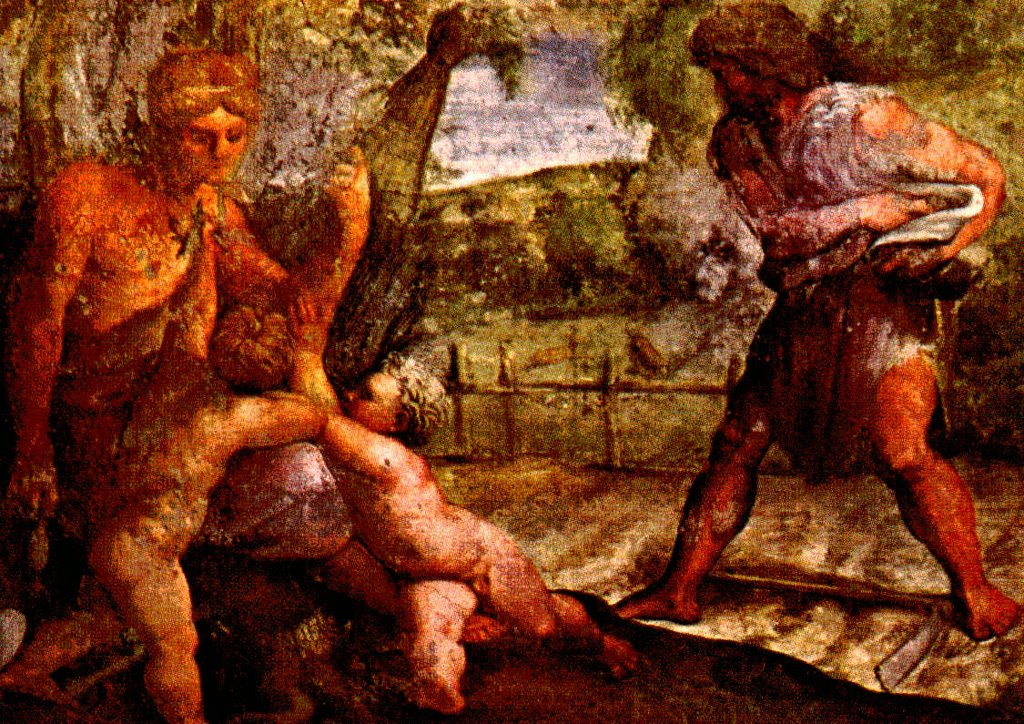
To build upon this view of Luther, let us go all the way back to the Garden of Eden. In Genesis 2:15 we read, “And the Lord God took the man and put him into the Garden of Eden to dress it and to keep it.” Here in the garden, in perfection with no curse, God created man to work, for vocation, not vacation. The garden was not the ideal retirement resort, nor a haven from work built for leisure. Work is not a curse upon man; we were created to work, and not to work stands in opposition to God’s creative design for us. Genesis 2:19-20 informs us that God gave Adam the task of naming the animals, no small undertaking, and it calls Eve Adam’s helpmeet. If the garden was about doing nothing, what was it she was meant to help him do?

It is true that work in the garden was a fulfilling, unencumbered act, but it was still work. In Genesis 3:17-20, which records the judgment placed upon mankind after the fall, we do not find God declaring work to be a curse in and of itself. He has left work to be a part of the created purpose for man; the curse involves the fact that work will no longer be unencumbered. It will include burden and hindrance, which Genesis 3:19 calls “the sweat of your face.” Genesis 3:17 says, “cursed is the ground,” but we do not consider this a curse upon agriculture alone, because there is no profession that is not ultimately derived from the ground. For example, we work with wood or various metals, ores, or alloys. Our medicines come from plants growing in the earth. Our animals, from which come our clothing, shoes, and a great steak dinner, survive upon it. When God curses the ground He invariably spreads the curse into every conceivable type of work man may ever do, and sweating is not about the literal act of perspiring, but about the fact that work will take something out of us. It is to be energy-depleting.

To wish for or to strive for a life free from the burden and hindrance of work is to reach for what cannot, should not, and will not be in this life. Even redemption does not remove the temporal consequences of the curse upon mankind or our own sin, but only removes the eternal consequences of it and bestows the future hope of its end in and with Christ Jesus our Lord. Work must not be viewed as evil or something to be avoided, but as a way in which we serve God in His providence and fulfill our created purpose.

Love Thy Neighbor
Work gives us the opportunity to keep what Christ called the “second greatest” commandment, “love thy neighbor.” The Swedish theologian Gustav Wingren stated, “God does not need your good works, but your neighbor does.” (3) This is what followers of Calvin called “the cultural mandate. (4) This means that we are not individuals in our vocations but a part of the greater whole. In fact, our vocations are to function in and through our culture. Christianity is not meant to be applied topically. In our vocations we are in the mix of life, not separate or exclusive. Here we can be salt and light. Where do we most often find the Lord Jesus in the Gospels but in the mix? In the cultural mandate, Luther’s milkmaid is loving her neighbor who needs milk, and so are the delivery man who brings it and the store who sells it, even if they do it unintentionally, when it is just a job to them.

Consider John 5:17 where the Lord Jesus responds to an accusation that he has violated the Sabbath work laws (an issue outside the scope of this article). He replies, “My father has been working until now, and I have been working.” Imagine if God should at any time retire, step out of the business of providence, and set aside His sovereign role in all that exists. How long could the world last? Colossians 1:17 states that “by him all things consist,” so we must conclude that the world would cease at the moment He stopped working. (5)

Conclusion
Work in the truest sense reflects our working creator and is a real part of being in His image, since when we work, we are required to be rational, moral, and creative. Work is what we were created to do. Our vocation is a divine calling by which we serve God and love our neighbor. Through it, we affect our culture and reflect in image our creator God. Yes, it is often overwhelming and burdensome, and yes, we are human to desire that it not be so, but let it move us to long for a better country to come, not escape or alter the current one. Work is necessary but not evil, and no amount of money can buy us out of it. Remember, vacation is not a vocation, and even vacation is not always that good."

Notes
1. Gene Edward Veith, “The Doctrine of Vocation: How God Hides Himself in Human Work,” Modern Reformation, 8, no. 3 (May/June 1999), 4.
2. Veith, 5.
3. Veith, 5.
4. W. Robert Godfrey, “Neither Individualism nor Statism,” Modern Reformation. 8, no.3 (May/June 1999), 22.
5. God’s rest from work noted in Genesis 2:1-3 is a rest from His work of creation, not His work of sustaining. Colossians 1:17 states “by him all things consist,” which means “to hold together,” so obviously He continued to sustain while He rested. Even on the Sabbath, when the Israelites were commanded not to work, they could do any work that was necessary to sustain life. The Lord Jesus was accused of Sabbath-breaking for this very type of work in the picking of corn (Luke 6:1-5).

Reprinted with permission from the Business Reform magazine,
a bimonthly magazine published by The Business Reform Foundation (www.businessreform.com), Ashland, Ohio