Showing posts with label contentment. Show all posts

Thursday, July 11, 2013

THE TREASURE OF BIBLICAL CONTENTMENT
...active rest in the sovereignty of God

Phil. 4:10 But I rejoiced in the Lord greatly, that now at last you have revived your concern for me; indeed, you were concerned before, but you lacked opportunity.

Introduction:
Philippians, is a letter of deep gratitude—marked by the continuous use of the word joy and/or rejoice. Paul is writing this letter of thanksgiving and appreciation for the kindness and generosity of the believers at Philippi expressed to him. He warns them of false teachers (3:1-4:1), to inform them of his situation in Rome (1:12-26), to encourage them in unity (2:1-2), and to commemorate his dear friend and co-worker Epaphroditus (2:25).

Paul finds himself incarcerated at Rome (1:13, 4:22), under house arrest—chained to a Roman guard (Acts 28:16) though he still was permitted to receive visitors and still havepthe opportunity to preach the gospel. He is at low ebb in his ministry and life anticipating a trial before Nero, which could result in his execution. These Philippian believers had a great love for him and they send Epaphroditus to Paul to bring to him what the apostle calls the “sweet aroma, an acceptable sacrifice, well-pleasing to God” (4:18).

In these eleven verses (Phil. 4:10-20) the Apostle Paul teaches us seven key things about contentment. Let's begin with verse 10 and the first of these truths.

Discontent can be caused by several things:

-The death of a loved one or friend.
-The loss of estate or money.
-When relationships don’t satisfy our longings.
-When friendships prove unfaithful and distrustful.
-The broken heart for a wayward or rebellious child.
-When coming under great criticism or reproach unjustly. (discontent arising from disrespect savors too much pride—the Lord will use the arrows of another to teach us to have a lower opinion of ourselves than others may have).
-Suffering for the truth. (A carnal man makes more of his sufferings and less of his sins. The one heart cries, take away the punishment; the other heart cries, take away my iniquity.)
-The prosperity of the wicked—while the righteous suffer the loss of earthly things. (Psalm 37; 73)
-The evil of the times—when every mans opinion is his bible. That kind of error is corrupting and poisonous. The devil is the father and pride is the mother of pride—self-esteem and self-regard are two of its children.
-Covetousness—inadequate view of ones spiritual gifts and part in the body of Christ. Desiring someone else’s position, prominence or proficiency. (Jealousy, envy, or coveting the unholy trinity of wrongful desire).
-Burdens for the church. “Cain put the knife to Abel’s throat and ever since the church’s veins have bled; but she is like the vine, which by bleeding grows and like the palm tree—the more weight is laid upon it the higher it rises” (Thomas Watson).
-Fear - the uncertainty of tomorrow (James 4:13-14).
-Sin (Psalm 32:2-4).
This is the stuff of real faith beloved. Are we truly content in the Lord or are those just words we conveniently say out of religious programming rather than true love for the Master? These are but a few of the things that I know in my life if left unguarded, unchecked, and unnoticed will rob me of my daily contentment in the Lord.

We can see discontent at the heart of sin: consider Adam and Eve in the Fall; Cain's murder of his brother Abel; David’s adultery; Satan’s heavenly rebellion; Nebuchednezar’s arrogance and pride; Demas’s apostasy; Judas’s betrayal; Herod’s death; and on and on it goes...

Thomas Watson once said these profound words:
“A good conscience can sleep in the mouth of a canon.”

Are we that content beloved?

What is contentment?

Here are a few verses that will help us biblically define its meaning:
1 Tim. 6:6. “But godliness actually is a means of great gain, when accompanied by contentment.”

Heb.13:5, “Let your character be free from the love of money, being content with what you have; for He Himself has said, ‘I will never desert you, nor will I ever forsake you.’” (cf Deut. 31:6, 8; Josh. 1:5)

2 Cor. 12:10, “Therefore I am well content with weaknesses, with insults, with distresses, with persecutions, with difficulties, for Christ’s sake; for when I am weak, then I am strong.”
We could say then that contentment is knowing that God orchestrates all things for our good and for His glory according to His holy purposes. It is being completely sufficed and satisfied with who God is and with what God does.

“Blessed is he who does not get offended because of me.”
(Matthew 11:6, “the forgotten beatitude”)

The Greek word for contentment is αυταρκεσ and means to be self sufficient, to be satisfied, to have enough. To have an independence from aid or help. An independence from external circumstances supporting oneself without anyone’s aid. Paul was satisfied. But his soul-sufficiency is not derived from any resources which the soul has in itself. Paul is no vain boaster and would never say, “I am the Captain of my soul” (William Hendricksen). His contentment was only found in and through the person Jesus Christ alone.

The Stoics had made the word contentment into a virtue in the Greek culture. They used it as a term of total indifference to mean “to be unmoved by joy or grief.” The phrase “I don’t care” would sum it up. No matter what occurred, blessing or tragedy, health or sickness, life or death, plenty or privation they would simply reply, “I don’t care.” The Apostle Paul was no Stoic and could rest not in fatalism, but in the sovereignty of God.

This is where Paul continues to instruct us in Philippians 4 on learning the treasure of biblical contentment; and he points to the foundation of contentment in Christ—the sovereignty of God.

1. Rest in God’s Sovereignty (v.10) - Trust
v.10 - “But I rejoiced in the Lord greatly, that now at last you have revived your concern for me; indeed, you were concerned before, but you lacked opportunity."

Sovereignty means that God is in control of every area of your life. We like to pray, “Thy will be done…” but then get frustrated when He does it! (cp, Acts 16:19, 25ff; Psalm 37:3-7, 34; Is.45; Job 38-40; Phil. 2:13f). A great example of God’s sovereignty in contentment is to read through the life of Joseph in Genesis 37-50. It culminates in 50:20 with these familiar and powerful words when Joseph is confronting his brothers who sold him into slavery by saying, “what you meant for evil, God meant it for good in order to bring about this present result.”

That’s biblical sovereignty in contentment in the most concise terms. Joseph was resigned to God’s purposes being accomplished even through the tragic events of his life done so by the hands of his own brothers—his own family.

But I rejoiced in the Lord greatly (χαιρω - rejoice) a timeless aor. meaning “I did rejoice, I do rejoice, I am always rejoicing!” This was Paul’s continuous state of personality and this rejoicing was great. Paul’s mega-rejoicing was motivated by the highest possible considerations as being in the closest union with the Lord, but also with the full implication of this gift.

That now at last you have revived your concern for me…
“Revived is a word properly applicable to plants or flowers, meaning to grow green again; to flourish again; to spring up again. Here the meaning is, that they had been again prospered in their care of him, and to Paul it seemed as if their care had sprung up anew” (Barnes).
Just as in the winter a tree or shrub or flower seems to be dead and lifeless, but in the springtime blossoms again with the beauty and life that it demonstrated in the past, so with the Philippians. Their love for Paul though in the past was great and for a season seemed to be lifeless and silent. But now was blooming again for it had found a way for that expression of love to unfold. “You caused your thought of me to sprout afresh after a long winter.”

Though you surely did care…
They never stopped caring for Paul though a long time had passed between their gifts. Dr. MacArthur has catalogued Paul's journey in contentment this way:
  • Ten years have passed since Paul had received the last gift from the Philippians.
  • Ten years since he arrived in Philippi
  • Ten years since he preached the gospel there
  • Ten years since Lydia and her household were won for Christ
  • Ten years since he was throne in jail
  • Ten years since the earthquake freed all the prisoners
  • Ten years since the conversion of the Philippian jailer and his whole household
  • Ten years since he went Thessalonica and to Berea
  • Ten years since he left Macedonia for the cities of Athens and Corinth
  • Ten years since Paul preached repentance and “the resurrection of the dead” at the Areopagus
  • Ten years since he discipled Aquila and Priscilla
  • Ten years since Crispus the leader of synagogue was converted with his whole household and the result many Corinthians believed the gospel.
  • Ten years since the Philippians’ last expression of love for him.
But you lacked opportunity. Within the season of God’s providence they could not respond to Paul’s needs “at that time.” (v.15-16; 2 Cor. 11:8-9)

But this didn’t bother Paul, for he was content to wait on the Lord. God is in control. He is sovereign in that He is ordering everything for His own holy purpose. Sovereignty is not fatalism—the end is all we see and the means are not significant. Nor is it what I call “botchulism”—man excusing his own sinful ways by saying, “God permitted it, therefore, He must have condoned it.” Nor is it “androidianism’—man living in some sort of paralyzed robotic state as a benign bystander being tugged along like a marionette on a string.

Sovereignty is the confidence and assurance that the Lord is not only omniscient, that He know all things—but that He is also omnipotent, able to bring that which He wills and knows into existence and integrate into perfect conformity with His person and plan for all men.

Beloved, there are no coincidences in the Christian’s life. There are no accidents or cosmic surprises that disrupt the plans of God. He IS orchestrating all things for our good and His glory according to His divine purposes! Amen?

Because He is God
Because He is God, He must be reckoned with. Because He is God, He must not be trifled with. Because He is God, we must love Him with all of our heart, soul, mind and strength—and love our neighbor as ourselves. Because He is God, we ought to worship Him in spirit and truth. Because He is God, we esteem Him with an undivided heart as First Love. Because He is God, we must approach Him clothed in contrition and we tremble at His Word. Because He is God, we give Him the preeminence in all things. Because He is God, he has given us His grace instead of His wrath; His love instead of His enmity; His mercy instead of His justice; joy unspeakable in glory instead of torment in hell for perpetuity.

Because He is God, I have no right to myself. Because He is God, I must walk in love, and love others, as Christ loved me and gave Himself for me. Because He is God, I must be willing to forgive as God in Christ has forgiven me. Because He is God, we love the brethren. Because He is God, I cannot harbor anger, wrath, clamor, bitterness, and malice in my heart toward another. Because He is God, I must turn the other cheek, go the extra mile, and give someone my cloak if they want my coat too. Because He is God, I must be willing to suffer the loss of all things, to gain everything. Because He is God, I can rest in the surety that He is orchestrating all things for our good and His glory. Because He is God, I cannot repay evil for evil, wrong for wrong, hurt for hurt. Because He is God, we may rejoice when our hearts are breaking and our world has been shaken. Because He is God, our trials are blessings—invited guests and not strangers.

Because He is God, we keep our vows to our spouse even when he or she seems unlovable, unapproachable, unteachable, or uncaring. Because He is God, we train our children in the nurture and admonition of the Lord. Because He is God, we cannot take another to court and sue for reparations. Because He is God, we have the right to be wronged. Because He is God, we love His Word more than daily food. Because He is God, pastors should preach the Word of God instead of being clever asinine raconteurs. Because He is God, the church must discipline sin and not wink at it. Because He is God, I cannot cherish my sin, but must daily repent of it. Because He is God, I’ve made a covenant with my eyes. Because He is God, I must guard my heart. Because He is God, I must not be motivated by mans applause, but by His “well done.” Because He is God, we cannot become unequally yoked with an unbeliever in any spiritual ministry or enterprise. Because He is God, all our possessions are for the Master’s use—they are not ours; they belong to Him. Because He is God, we must deny ourselves, daily take up our cross and follow Him.

To do all to His glory, according to His divine purpose, under the authority of His Word, to seek His will more than earthly reward, to embrace the fellowship of His sufferings rather than the pleasures of this world even for a season, to live self-sacrificially in unreciprocated love and service to others—to do all this for no other reason than… because He is God!

God alone is the source, sustenance, and sustaining treasure of the Christians contentment. Anything else will be fleeting; anything else can become an idol; anything else will ultimately leave us empty, unsatisfied, and restless.

Monday, May 04, 2009

CONTENTMENT (pt 3)
...singing a heavenly song as strangers in a strange land

Psalm 119:54 

"Your statutes have been my songs in the house of my pilgrimage."

by Charles Bridges
Come, Christian pilgrim, and beguile your wearisome journey heavenward by "singing the Lord's song in this strange land." With the statutes of God in your hand and in your heart, you are furnished with a song for every step of your way,
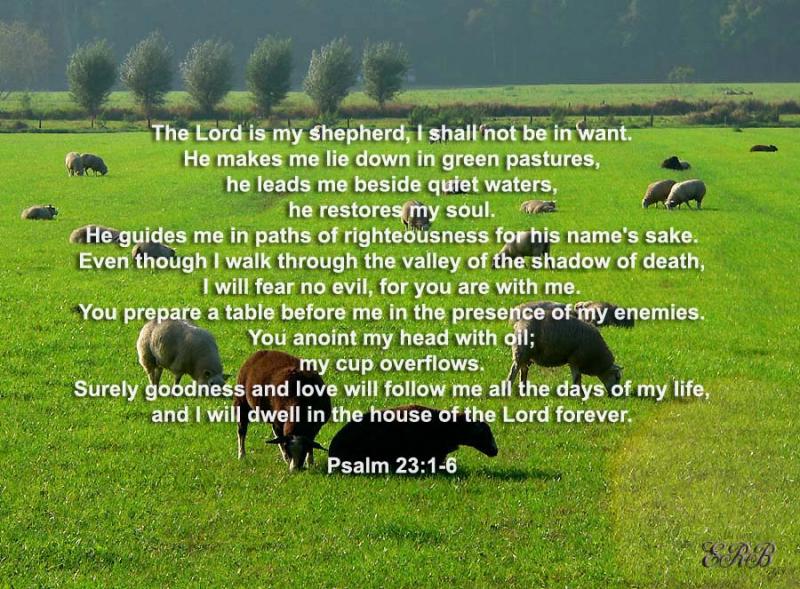
"The Lord is my shepherd; I shall not want. He makes me to lie down in green pastures: He leads me beside the still waters. He restores my soul: He leads me in the paths of righteousness for His name's sake. Yes, though I walk through the valley of the shadow of death I will fear no evil; for You are with me; Your rod and Your staff, they comfort me. You prepare a table before me in the presence of my enemies: You anoint my head with oil; my cup runs over. Surely goodness and mercy shall follow me all the days of my life; and I will dwell in the house of the Lord forever."
How delightfully does this song bring before you Him, who having laid down His life for you, engages Himself as your Provider, your Keeper, your Guide, your faithful and unchangeable Friend! Such a song, therefore, will smooth your path, and reconcile you to the many inconveniences of the way; while the recollection that this is only the house of your pilgrimage and not your home; and that "there remains a rest for the people of God," will support the exercise of faith and patience to the end. How striking the contrast between the wicked that forsake the law, and the Christian pilgrim, who makes it the subject of his daily song, and the source of his daily comfort! Yes, these same statutes, which are the yoke and burden of the ungodly, lead the true servant of the Lord from pleasure to pleasure; and, cherished by their vigorous influence, his way is made easy and prosperous. Evidently, therefore, our knowledge and delight in the Lord's statutes will furnish a decisive test of our real state before Him.

But it is important to remember that our cheerful song is connected with a pilgrim-spirit. Never forget that we are not at home; only happy strangers on our passage homewards. Here we have no settled habitation—no rest. We are looking for a better country: and as we look, we are seeking for it. Our "hearts are in the ways of it." Every day advances us nearer to it. In this spirit the statutes of the Lord will be our song. Here are the deeds of conveyance—our title made sure to an estate—not small, of little account, or of uncertain interest—but "an inheritance" of incalculable value, made over to us. Here we have sure direction—such as cannot mislead us—for the attainment of it. Here we are stimulated by the examples of our fellow-pilgrims, who have reached their home; and as we follow their track, many are the cordials by the way, and home brightens in the nearer prospect.

What reason have we then every moment to guard against the debasing, stupifying influence of the world, which makes us forget the proper character of a pilgrim! And what an habitual conflict must be maintained with the sloth and aversion of a reluctant heart to maintain our progress in the journey towards Zion! Reader! have you entered upon a pilgrim's life? Then what is your solace and refreshment on the road? It is dull, heavy, wearisome, to be a pilgrim without a song. And yet it is only the blessed experience of the Lord's statutes, that will tune our song. "If therefore you have tasted that the Lord is gracious;" if He has thus "put a new song into your mouth," oh! do not permit any carelessness or neglect to rob you of this heavenly anticipation. And that your lips be not found mute, seek to maintain a lively contemplation of the place where you are going—of Him who as your "forerunner is for you entered" there—and of the prospect, that, having "prepared a place for you, He will come again, and take you to Himself; that where He is, there you may be also." In this spirit, and with these hopes before you, you may take up your song, "O God, my heart is fixed: I will sing and give praise. I will bless the Lord at all times—His praise shall continually be in my mouth." Thus may you go on your pilgrimage "singing in the ways of the Lord," and commencing a song below, which in the world of praise above, shall never, never cease.

Friday, May 01, 2009

CONTENTMENT (pt 2)
...the delight and pleasure of trusting His sovereign purposes

Phil. 4:5 Let your forbearing spirit be known to all men. The Lord is near.
Phil. 4:6 Be anxious for nothing, but in everything by prayer and supplication with thanksgiving let your requests be made known to God.
Phil. 4:7 And the peace of God, which surpasses all comprehension, shall guard your hearts and your minds in Christ Jesus.
Phil. 4:8 ¶ Finally, brethren, whatever is true, whatever is honorable, whatever is right, whatever is pure, whatever is lovely, whatever is of good repute, if there is any excellence and if anything worthy of praise, let your mind dwell on these things.
Phil. 4:9 The things you have learned and received and heard and seen in me, practice these things; and the God of peace shall be with you. (NASB)

5. Maintain a Faithful Witness (v.5)
5:5 Let your forbearing spirit be known to all men. The Lord is near.

Forbearing here could be rendered “gentleness” or “reasonableness”. This is the yielding of our rights, as Christ Himself did (Phil. 2:5-11), and who did not press the strictness of His Law against us as we deserve. This is the grace of God in action.

Here is an apt description of such a forbearing spirit:

An obedient submissiveness to God and His will; unwavering faith displayed in a gentle attitude in kind acts towards others who are hurting you. It is a humble steadfastness; able to submit to injustice, disgrace, and maltreatment free from hatred, malice and revenge.
It is that which we are to make "known to all men." What a witness and testimony of God’s grace working in our lives to have this personality of the Spirit known to others. I surely haven’t arrived at this in my life; it is a process of grace that thankfully one day will be completed (Jude 24-25).

The Apostle provides all the necessary reason to live in this selfless manner “the Lord is near.” Lightfoot calls this, “the Apostle’s watchword.” The Lord’s coming is the grand motive to every Christian grace beloved. “You too be patient; strengthen your hearts, for the coming of the Lord is at hand” (James 5:8).

Albert Barnes says,
“This has the appearance of being a phrase in common use among the early Christians, and as being designed to keep before their minds a lively impression of an event which ought, by its anticipation, to produce an important effect… The idea is, that the expectation that the Lord Jesus will “come” ought to be allowed to produce moderation in our manner of living, in our expectations of what this world can furnish, and in our desires of earthly good. On him who feels that he is soon to die, and to stand at the bar of God—on him who expects soon to see the Lord Jesus coming in the clouds of heaven, it cannot fail to have this effect.

Men are extravagant in their plans of life, and in their expectations of earthly good for themselves and for their families, because they have no realizing sense of the truth that there is before them a vast eternity. He that has a lively expectation that heaven will soon be his, will form very moderate expectations of what this world can furnish.”
Contentment finds its rest not in this world, but in the life to come. Maranatha!

6. Don’t be anxious (v.6a)
6a Be anxious for nothing,

O the utter simplicity and power of those words--"be anxious for nothing." By nature, I am an anxious person; are you? I fret over what my provision may be for another day. I am sometimes troubled for the future of my children and the world in which they are growing and living. I am burdened by the rigors of ministry and family.

“Seek ye first the kingdom…” are the echoing words ringing in my heart daily. Keep on for the Lord, trust in Him, labor hard for Him, cast your cares on Him, delight yourself in Him, —but, solicitous for nothing. I cannot increase my days for a moment by worrying; I cannot add one element to my station in life by fretting. I must, by God’s grace, be restless for not one thing.

There is also such a disturbing finality to those words—“for nothing”—isn’t there? This uncomfortable certainty robs us of our confidence and control of our own destiny—for every day, every hour, and every moment we must be resigned to Christ and His design for us. This is the constancy of the believer in Christ. To be given to an anxious heart is to really question the Lord’s providential care and distrust His divine working in our lives. This anxious-free-living though is not fatalism; but Sovereignty’s great rest for His own. This does not relieve any of us from the dialy duty of life; our work, education, relationships, living as faithful citizens of this earth, etc. On the contrary, it means that our lives on earth will be marked by a sense of calm trust in the Lord in a world of turmoil and instability.

IOW, we may find great comfort and solace in Christ despite what “life” may give to us each day. This is the resignation of our will to Him; our purposes to His plan; our desires for His determination; and our dreams to His eternal decrees.

Let me ask you beloved, do you have a sick child in intensive care today? A wayward son or daughter that you have prayed for and they still are not living for Christ? Have you lost a place of employ and have no presents to give your children this Christmas? Have you gone through a divorce or the death of a loved one recently? Here is where the reality of this truth applies, “be anxious for nothing.”

7. Pray always with thanksgiving (v.6b-7)
6b but in everything by prayer and supplication with thanksgiving let your requests be made known to God. 7 And the peace of God, which surpasses all comprehension, shall guard your hearts and your minds in Christ Jesus.

This is the remembrance of past answered prayers in the Lord that we recall in confidence that He will hear and answer our current petitions before Him. We will “let our requests be known to God” with unreserved confidence, filial, and generous abandon on His throne of grace “to find help in time of need.” Jesus said, “men ought always to pray and not faint.” Are you losing heart beloved today? Then march on your knees and pray to the One who sees and knows every need “even before you ask of Him.” Every appeal no matter how small or immense; no matter how trivial or profound; whether a pebble or boulder of weight of need, we must bring them all to the Lord in a humble expectant heart of thanksgiving.

The result, “the peace of God will guard our hearts and minds in Christ Jesus.” Think of it, His peace will protect our thoughts and desires in Christ Jesus; it will keep them from straying to sin, wayward desires, and filling the anxiousness of our souls by playing god with our vaporous lives. This is the danger when our days are troubled. But oh, there is sweet protection even in our supplications—He “shall guard our hearts and minds.” This is a tremendous promise that we seldom summon in our time of need. But there it is for us. His peace “surpasses all comprehension” and is there for every believer.

8. Guard your thought life (v.8)
8 Finally, brethren, whatever is true, whatever is honorable, whatever is right, whatever is pure, whatever is lovely, whatever is of good repute, if there is any excellence and if anything worthy of praise, let your mind dwell on these things.

Here is what Paul says should be the continual preoccupation of our minds. "Dwell on:"
  • What is true: truth, sincere, everything that is the reverse of falsehood, the highest moral character, all that is honest and just before God and man.
  • What is honorable: reverent, reputable, noble. That which is venerable and deserving of respect or esteem; majestic or awe-inspiring. It encompasses that which did not violate conscience or interfere with the Law of God.
  • What is right: just, virtues of justice and honesty. Being above reproach by doing what is right. Uncorrupted integrity.
  • What is pure: chaste, undefiled, clean (in thoughts, words and deeds).
  • What is lovely: pleasing and winsome. "The things whose grace attracts." (Robertson)
  • What is of good repute: fair-speaking, praiseworthy, attractive, appealing.
  • If there is any excellence: virtue; the most comprehensive Greek term for moral excellence and the central them for Greek ethics.
  • And praise: worthy of praise
"Dwell (think) on these things." To consider, reckon and take into account. Literally, "use your facilities upon them." That is, to "fix our minds" upon these things. This is present tense Christianity; IOW, Paul is describing and prescribing the daily habit of the Christian.

This is the two-pillar life of piety and morality.
“Piety is love with its face towards God; morality is love with its face toward man.” (JFB)
We are to continually regard these things in our lives as an act of praise-worthiness. Contentment begins with the mind firmly fixed upon all that God deems true and right, holy and pure in His Word for our lives.

9. Obey God’s Word (v.9)
9 The things you have learned and received and heard and seen in me, practice these things; and the God of peace shall be with you.

This is the practice of holiness. This is Christianity lived. This is being filled with the Spirit and the Word of Christ dwelling richly in us. And the same promise as before, “the God of peace shall be with you.”

Are we lacking anything from our Lord to produce contentment in our lives? Not one thing. Contentment, even for Paul, was something he learned in the school of sanctification (4:12).

We will close with brother Spurgeon ministering to our sometimes confused, discontented souls once again with these powerful words,
“You that love not Christ, recollect that you are the most miserable people in the world. Though you may think yourselves happy, there is no one of us that would change places with the best of you. When we are very sick, very poor, and on the borders of the grave, if you were to step in and say to us “Come, I will change places with you; you shall have my gold, and my silver, me riches, and my health,” and the like. There is not one living Christian that would change places with you. We would not stop to deliberate, we would give you at once our answer — “No, go your way, and delight in what you have, but all your treasures are transient, they will soon pass away. We will keep our sufferings, and you shall keep your gaudy toys.”
Saints have no hell but what they suffer here on earth; sinners will have no heaven but what they have here in this poor troublous world. We have our sufferings here and our glory afterwards; you may have your glory here, but you will have your sufferings forever and ever. God grant you new hearts, and right spirits, a living faith in a living Jesus, and then I would say to you as I have said to the rest — man, in whatsoever state you are, be content.”

Thursday, April 30, 2009

CONTENTMENT (pt 1)
...learning to live in the sufficiency of Christ

An exposition of Phil. 4:1-9.
Phil. 4:1 ¶ Therefore, my beloved brethren whom I long to see, my joy and crown, so stand firm in the Lord, my beloved.
Phil. 4:2 I urge Euodia and I urge Syntyche to live in harmony in the Lord.
Phil. 4:3 Indeed, true comrade, I ask you also to help these women who have shared my struggle in the cause of the gospel, together with Clement also, and the rest of my fellow workers, whose names are in the book of life.
Phil. 4:4 Rejoice in the Lord always; again I will say, rejoice!
Phil. 4:5 Let your forbearing spirit be known to all men. The Lord is near.
Phil. 4:6 Be anxious for nothing, but in everything by prayer and supplication with thanksgiving let your requests be made known to God.
Phil. 4:7 And the peace of God, which surpasses all comprehension, shall guard your hearts and your minds in Christ Jesus.
Phil. 4:8 ¶ Finally, brethren, whatever is true, whatever is honorable, whatever is right, whatever is pure, whatever is lovely, whatever is of good repute, if there is any excellence and if anything worthy of praise, let your mind dwell on these things.
Phil. 4:9 The things you have learned and received and heard and seen in me, practice these things; and the God of peace shall be with you. (NASB)


1. Stand firm in the Lord (v.1)

Phil. 4:1 THEREFORE, my beloved brethren whom I long to see, my joy and crown, so stand firm in the Lord, my beloved.

Defection can catch us all off guard especially when panic sets in. Paul is communicating his great love for these believers in Philippi to keep on for the Lord. He was longing to see them whom he calls "my joy and crown." He affectionately addresses them in light of Christ’s return and being citizens of heaven (3:20-21); even in light of those who had apostatized and were enemies of the cross "whose end is destruction, whose god is their appetite, and whose glory is in their shame, who set their minds on earthly things" (3:19); the Apostle lovingly admonishes them to “stand firm in the Lord.”

This is what the Reformers refer to as the “perseverance of the saints.” Because we have been preserved in Christ, we may with confidence persevere for Christ. In Phil. 1:27, Paul states this same truth,
“Only let your manner of life be worthy of the gospel of Christ, so that whether I come and see you or am absent, I may hear of you that you are standing firm in one spirit, with one mind striving side by side for the faith of the gospel.”
This striving and endurance was evidenced by a “manner of life… worthy of the gospel of Christ” and “for the faith of the gospel.” If all Christians are under the influence of the gospel, then there would be fruit that would distinguish us from others. How we dress, what we say, our values, the temperment of our homes, and places of employ, etc. - we illustrate to an unregenerate world that we are "new creatures" in the pedestrian things of living. Paul brings this home by practically pointing to an area of difficulty for us all - genuine Christian unity, service, and fellowship. He says, the manner of life lived worthy of the gospel will manifest itself "in one spirit, with one mind striving side by side" with other believers.

This is active citizenship in the City of God. It is the energy of the Christian faith producing faithful individuals keeping on (as D. M. Lloyd Jones would say) for the sake of the gospel. It is very important that Christians should frame their lives by what the Puritans would call, "the rules of the gospel." And, to this end, we should study them, and know what they are.

Notice his admonishment is concluded with the same affection he begins this verse – “my beloved.” This is the heart of a true pastor; a genuine Christian—saying without fail the necessary admonition, but tempered with great charity of heart. Paul is writing this epistle from prison. He is in the midst of suffering for Christ Jesus as an “ambassador in chains.” Even his reputation and authority as an Apostle was being maligned in Philippi (1 Thess. 2:1-3). But he was not preoccupied with his own physical suffering or the destruction of his reputation, but only for their firm continual standing in the Lord.

Oh for men of God like that today to shepherd our churches and keep watch over our souls (Heb. 13:7, 17).

2. Live in harmony (v.2)
4:2 I urge Euodia and I urge Syntyche to live in harmony in the Lord.

Euodia means “prosperous journey” and Syntyche means “pleasant acquaintance.” These two women had names to promote unity and victory in the faith, but instead, they were in conflict. So much so that the Apostle uses strong language “I urge you…” also translated, "I plead with" or "beseech you." He is literally begging them in this strong word of encouragement to settle their differences and live in “the same mind” with one another.

Little is known about these women. But surely they must have had some position of visible authority or service within the church (possibly as deaconesses) that because of their dispute could do considerable damage within the church. Paul reminds them of the true foundation of Christian union - “harmony in the Lord.” Contentment in Christian fellowship should not be tainted by envy, jealously, undo friction, contentiousness or strife; and firmly rooted "in the Lord.” Servanthood governed by humility, in considering others more esteemed than oursleves, is the antidote for that which could disrupt genuine Christian fellowship and cause reproach in the body of Christ.

3. Keep eternity in view (v.3)
4:3 Indeed, true comrade, I ask you also to help these women who have shared my struggle in the cause of the gospel, together with Clement also, and the rest of my fellow workers, whose names are in the book of life.

Paul uses one of my favorite terms in all of Scripture – “faithful yokefellow” (Geneva, KJV); here stated as "true companion." The Greek suggests one whom Paul had great trust, affection and common bond in the ministry. It has been translated also as companion and partner as well. When Dr. MacArthur's study bible was first released, he signed my copy "to a true yokefellow..." It brought tears to my eyes for I knew how undeserving I was and from where he was quoting. Yokefellow (yoked-together) is a rich term for it denotes an intimate partnership “in the cause of the gospel.” Can you think of "yokefellows" in your life; in your service to the Lord? I have been blessed with some great brothers to serve with in the ministry. I can honestly say, there is no greater depth of friendship I have ever known save with those whom I have labored with for the cause of Christ.

Paul doesn’t identify who this person is and to speculate would be foolish. But we do know this, he placed great confidence in this individual to “help these women” who also shared his struggle in the cause of the gospel. He entreated upon this one to help reconcile them in Christ--to mend the breach and cease the clashing. We are not immune from conflict even in the ministry are we? Sometimes great discord can come upon those mighty and mature in the faith such as with Paul and Barnabas (read Acts 15:37-39). Barnabas had invested heavily with the Apostle Paul in his early years in Christ defending him before the other apostles (Acts 9:27). But they parted company over the cowardice of John Mark and this dispute between them was so sharp and profound it could have ripped the church in two. Barnabas now had the daunting task of discipling John Mark. He must have done well, for at the end of Paul's life, he told Timothy "...pick up Mark and bring him with you, for he is useful to me for service" (2 Tim. 4:11b).

Paul (now resembling Barnabas) is urging reconciliation between Euodia and Syntyche because of eternity - “whose names are in the book of life.” This is good and practical wisdom. When we see other believers as those with whom we will spend eternity, then we will work to settle whatever differences there may be, though it may be painful and take some time. Grace in the end will prevail beloved, for “behold, how good and how pleasant it is for brothers to dwell together in unity!” (Psalm 133:1).

4. Rejoice Always in Christ (v.4)
4:4 Rejoice in the Lord always; again I will say, rejoice!

The Greek word for rejoice (chairete) was a familiar greeting in the early church. It carried the meaning of “the confidence God is in control.” That is the source of all our joy and rejoicing--God Himself. Suffering people especially need to know and be reminded that God is sovereign even over their trials. So when they greeted one another by saying “chairete”, they were reminded that the source of their rejoicing was not their sufferings, persecutions, trials—their environment--but the Lord Jesus Christ Himself. As the old saying goes, "our Christian life is not determined by environment, but by relationship."

This verse explodes with praise to the Lord in all things. “Rejoice in the Lord!” The well is deep for the adoration we have in Christ Jesus for the forgiveness of our sins and the promise of eternal in Him. He is our joy, our salvation, our life, our peace and our hope. We are complete in Him; He is all sufficient, all we need, lacking nothing.

And as if it were not enough, Paul invites them again to do so by saying, “again I will say, rejoice.” This is not a suggestion for happy living. It is the call for constant joy in the Lord. “For me to live is Christ…” - there is our joy. “And to die, gain” - there is our blessed hope. When Christ is our joy in our living; He will be our hope in our dying.

Oh beloved may we find our joy and rejoicing not in the transitory things of this world, but in the Lord. He is our contentment… amen?
"O Christian, never be proud of things that are so transient, injurious, and uncertain as the riches of this evil world! But set your heart on the true and durable riches of grace in Christ Jesus." -ISAAC AMBROSE

 this has been an encore presentation

Tuesday, March 17, 2009

CHRIST - OUR ALL IN ALL
...the name of the Lord is our delight and refuge

an encore presentation


It is refreshing to read a true man of God like Jeremiah Burroughs. Burroughs was not a man of the times; he transcended them. He was not concerned about adapting to culture, but in pleasing Christ. He was not for sale and no one owned his heart and mind save Christ Jesus the Lord His Word, and His gospel.

As it was said of D.L. Moody, could be said of Jeremiah Burroughs as well. That he did not have a monopoly on the Holy Spirit; but the Holy Spirit did have a monopoly on Jeremiah Burroughs.

May I encourage you to not read the following through the blurry eyes of postmodernity, but with the lucidity that is birthed from being in the reverent presence of our holy God.


by Jeremiah Burroughs
from "The Saints' Treasury" (1657)

The Apostle Paul was a chosen vessel to bear the name of Christ, to carry it up and down in the world. Indeed, his spirit was full of Christ. He desired to know nothing but Christ, to preach nothing but Christ, to be found in none but Christ. The very name of Christ was delightful to him. He seeks to magnify Christ in all of his epistles and, in these words I read to you, he omnifies Christ. He does not only make Him great but he makes Him all. 

"There is neither Greek nor Jew, 
circumcision nor uncircumcision, 
barbarian, Scythian, bond nor free, 
but Christ is all and in all." 

That is, there is no privilege in the one to commend them to God, and there is no lack of anything in the other to hinder them from God. Let men be what they will in their outward respects, what is that to God? Let them be never so mean in regard of all outward things, that can never hinder them from the enjoyment of God, for God does not look at these things, but Christ is all and in all to them.

As far as God sees Christ in anyone He accepts them. If Christ is not there, no matter what they have, He does not regard them. Christ is all in all, even in the esteem of the Father Himself. He was the delight of the Father from all eternity, Prov.8:30, and the Father undertook infinite contentment in Him upon His willingness to undertake this blessed work of the redemption of mankind. God the Father is infinitely satisfied in Christ. He is all in all to Him. Surely if Christ is an object sufficient for the satisfaction of the Father, much more, then, is He an object sufficient for the satisfaction of any soul.

But that which is the main scope of the Holy Ghost here is this high expression of Christ's transcendent excellency, which I will deliver in this doctrinal proposition: 
Christ is the only means of conveyance of good that God the Father intends to communicate unto the children of men in order to eternal life; He is all in all. This which I am to preach to you now, namely God's communicating Himself in His mercy to mankind through a Mediator, is the very sum of the gospel, the great mystery of godliness. It is the chief part of the mind and counsel of God that He would have made known to the children of men in this world. This is the great message that the ministers of the gospel have to bring, and it is the most absolutely necessary point in all theology.

That which I shall this day endeavor is to show you something of the glory of God shining in this truth: 
that God communicates Himself through a Mediator, through His Son. It is absolutely necessary for you to know if you would have eternal life. It is possible to be ignorant of many other truths and still be saved, but there must be something of this or there can be no salvation. The mistake in this very thing is the miscarriage and the eternal undoing of thousands upon thousands of souls. Many believe that they have need of, and can never be saved without, God's mercy. The light of nature convinces us of this. But they are ignorant of, and do not see the reality of, this truth: that God communicates His mercy through a Mediator. They miscarry and perish eternally with cries to God for mercy because they come to God, but not through a Mediator.

This is the sum of the gospel and the most supernatural truth revealed in all the Book of God. 
It is a truth that was hidden from nearly all the world for many ages. There is no truth revealed in all the Scriptures whereby we can honor God as much as this. This, indeed, is the great honor that God would have in the world, to be honored in His Son and in the great design He has of bringing forth glorious things by His Son and, therefore, though we know never so much of God and would honor Him merely as the Creator of heaven and earth, yet God does not accept that honor. That is only to honor Him in a natural way. We never know what it is to honor God correctly so as to be accepted by Him until we come to honor Him in an evangelical way, to honor Him in His Son. Yet the greatest honor He has from most in this world, even from multitudes in the very church of God who hear the mystery of Christ opened to them, is offered to Him merely in a natural way and not in this spiritual, evangelical service of God.

There is no coming to the Father but by Christ. He is the way. 
The Apostle says in I Cor.3, All things are yours, whether Paul, or Apollo, or Cephas, or the world, or life, or death, or things present, or things to come, all are yours. How is that? Mark it, All are yours, and ye are Christ's, and Christ is God's. God the Father is the principle of all good. All comes from Him first, but it does not come from Him immediately. He does not say all are yours for you are God's, because you have an interest in God, all therefore comes to be yours. No, but all is yours and you are Christ's, and Christ is God's. So you see here how Christ comes between you and God.

All good is in God, true, but how shall we come to partake of that good? There is such a distance between you and God that, were not Christ in the middle, you would never come together. But Christ has come between and joined you together so that all is yours because you are Christ's and Christ is God's. Think of God as the Fountain of all good, and Christ, as it were, the Cistern, and from Him are pipes converged to every believer. Faith sucks at the mouth of every pipe and draws from God, but it comes from God through Christ. The Father fills the Son with all good and so it comes from the Father, through the Son, by faith unto the soul of every believer. We have a notable expression of this mystery in Ephesians, the second and third chapters. In chapter 2:12, Paul has told them that they had been without hope and without God in the world, but, he says in verse 13, Ye who were sometimes far off are made nigh by the blood of Christ. It is by the blood of Christ that you have anything to do with God. But especially in Eph.3:12, In whom we have boldness and access with confidence by the faith of Him. In whom? In Christ we come to have boldness and access. The word "boldness" signifies liberty of speech. We can come before God with liberty of speech, and we also have access. We are led by the hand of Christ to the Father. There is no coming to the Father except by Christ, and Christ takes a believer by the hand and leads him to the Father, and so he comes to have boldness.

He is the way of conveying good to us by His intercession, for He is now and shall forever be at the right hand of the Father in glory making intercession for His people. That is, He is continually presenting before the Father the work of His mediation, His merits, what He has done and suffered and is, as it were, pleading with His Father for the conveyance of all needful mercy and good unto the souls and bodies of His people whom He has redeemed. It is as if He should every moment eternally speak thus to the Father: "Father, behold, here is My blood, My merits, My death, all My sufferings, the work of My humiliation. It is for these. Yea, for this poor soul and for that poor soul particularly." Know that Christ thinks not only of the lump of believers in general, but particularly of every believer, and is continually presenting His infinite merits before the Father to plead with Him to supply of all grace and mercy to us. Thus He becomes an infinite way of conveying good to the souls of His people, and to be all and in all to them both here and eternally.

In the point of justification and the pardon of sins, the great thing we stand in need of from God is the acceptation of us as righteous. 
Christ is all in all to us here, that is the tenor of the gospel, Rom.3:24, ...being justified freely by His grace, through the redemption that is in Jesus Christ. Our justification is not made up by what we have done or all that we can possibly do. You will say, "True, we have done little." But suppose any of you should do your utmost in any particular that God requires. You will say, "I hope if I can do what I can that God will accept it." No, you made a great mistake if you think this. People are very apt to look upon God as if the terms between God and them were no other than this: God is full of pity and mercy and we are weak and can only do a little, but if we do what we are able, God will accept the will for the deed. No, God does not accept the will for the deed in the point of justification. It is true in those that are already justified that God accepts the will for the deed in the performance of a duty, so as to take delight in them, but in the point of justification, pardoning sin and acceptation to righteousness, He must there have perfect obedience. Though we endeavor never so much, unless we can bring God to a perfect righteousness, we are undone forever.

Therefore, it is not for you to rest upon the fact that you do what you can, have good wishes and desires and the like, for if all the righteousness of all the righteous men who ever lived were in one man, it would not be sufficient for his justification. It is not what God enables you to do either, that can be the formality of your justification. Such are the terms between God and you that there is nothing you can do of yourself, or be enabled to do, that is accepted by Him for your righteousness to eternal life.

He is all in all in point of adoption, Gal.3:26, For ye are all the children of God by faith in Christ Jesus, and chapter 4:4-5, 
But when the fulness of time was come, God sent forth His Son made of a woman, made under the law, to redeem them that were under the law, that we might receive the adoption of sons. And especially John 1:12, But as many as received Him, to them He gave power to become the sons of God, even to them that believe on His name. The word translated "power" is another word in the Greek. He gave them authority to become the sons of God. It is a word that imports more than the bare power. Everyone will challenge a part in sonship who is a child of God, but only those who are in Christ have authority to challenge it as their due.

In point of reconciliation and peace with God, Christ is all in all there, being justified by faith, we have peace with God through our Lord Jesus Christ, Rom .5:1. 
All the created power in heaven and earth cannot bring peace to a troubled soul. There is no salve for a wounded spirit but the blood of Christ applied to it. He is that brazen serpent that only is able to cure the strings of conscience. As Luther says, it is a harder matter to comfort an afflicted conscience than to raise the dead. I tell you, were there not a mighty Redeemer, the conscience of a man or woman could never be pacified once they apprehend the wrath of God against them. So Christ is all in all here.

Again, He is all in all in the lack of things, whatever it is that we lack. 
Do we lack grace, do we lack gifts, do we lack outward comforts in the world? There is enough in Christ. It is Christ that is instead of all, that is better than all, and that will supply all in His due time. Those who know Christ and have acquaintance with Him, though they have this and that comfort taken from them, they still know how to make supply out of Christ. They have that skill and art and mystery of godliness that they can make Christ to be all in all in the lack of all, and it is a great skill and mystery of godliness to know how to make up all in Christ in the lack of all.

Again, to the saints, Christ is all in all in the enjoyment of all. 
When they enjoy never so much of the creature comforts, Christ is all in all to them. The satisfaction that their souls have is not that they have larger estates, more friends, or greater comforts than others, but that they know how to enjoy Christ in all, and can look upon it as a fruit of the covenant that God made with them in Christ and as coming down from the fountain of God's eternal love and mercy in His Son, Zech.9: 11. God says there, As for thee also, by the blood of thy covenant, I have sent forth thy prisoners out of the pit wherein there is no water. That which is spoken there of the deliverance of the prisoners may be applied to all the mercies that a believer enjoys. Whatever deliverance he has from evil, whatever good he is possessed of, is by the blood of the covenants.

A believer can look upon every bit of meat he has, and upon all the good he enjoys, and can see it all come streaming to him in the blood of Christ. And so it comes more sweetly. The sun does not shine as warm through the air as it does through a magnifying glass. Take a magnifying glass and hold it between you and the sun and the glass will contract the beams of the sun so that it shall have an efficacy of heat, even to burn again. So the goodness of God that comes to people through the general bounty and patience of God does not have an efficacy to warm and heat their hearts, to draw them to God. But now Christ is, as it were, the magnifying glass that is held between God and the soul, and how the mercy that comes through this magnifying glass warms and heats outward comforts! Therefore, there are no people in the world who can enjoy outward comforts with as much fulness of contentment as do the people of God, because they all come to them through Christ. Christ is all in all in the enjoyment of all.

But to give you one more particular. As He is all in all in the good we have from God, so He is all in all in whatever we offer up to God: as in descent from God to us, so in ascent from us to God. 
Christ must come in here. He must be all in all in our services. Though our services be never so good, though they are spiritual, they must still find acceptance with the Father through Christ. That text in I Pet.2:5 is very remarkable for this, Ye also, as lively stones, are built up a spiritual house, an holy priesthood, to offer up spiritual sacrifices acceptable to God by Jesus Christ. Mark, to offer up spiritual sacrifices. But though the sacrif ce is spiritual, that is not enough to make it acceptable. Christ must come in. Therefore he adds, acceptable to God by Jesus Christ.

If Christ is all in all, then let us bless God that ever we knew Christ, and that the great mystery of the gospel has been revealed to us. For otherwise we would have been without God in the world, and what would have become of us had not this grace of God in the gospel been revealed to us? Could it ever have entered into your heart? Certainly not, nor into the heart of any creature in heaven and earth. Therefore, blessed are your ears that hear the things you hear. Blessed are your eyes which see the things you see, and know that when you come to live under the ministry of the gospel, you enjoy the greatest mercy that you have enjoyed since you were born.

This shows how dear Jesus Christ should be to us. Oh, how we should delight and take contentment in Him who brings the treasuries of grace from the bosom of the Father and opens them to us. And He not only opens the mind of God the Father to us, but comes and lets out the treasure of God's goodness to us. It was stopped before, but Christ opens the floodgates and lets the current of grace and mercy in upon us. Oh, how dear, then, should Christ be to us?

It was the speech of that martyr, Master Lambert, "None but Christ, none but Christ." Yea, when he suffered martyrdom for Christ. then none but Christ was dear to him because he saw that Christ was the way of conveying all good to him. If God were now to make a man the means of conveying a great deal of good to a nation, every man will be ready to have his eye upon that man. But there was never such a way of conveying good to us as Christ. Therefore, how should our hearts love Him, prize Him, and rejoice at the very thought of Him?

If you have a dear friend, and God makes that friend an instrument of mercy to you, how does it endear you to that friend? If the husband is an instrument of good to his wife or the wife to her husband, if a minister to his people or people to their minister? And so it is in all relations. And if it does so between man and man, how should it do so much more between us and Christ, who is indeed the Husband of His church, and through whom the fulness of God is let out to His people? Oh, how dear and precious, therefore, ought He to be to us!

Is Christ all in all? Then if we have an interest in Him, it should satisfy and content us though we have nothing or though we are nothing. 
Why? Because if we have Christ we have all. Though you lack parts, friends, estates, outward comforts, know Christ is to be your all, and is He not enough? As He said, Am I not better to thee than ten sons? So Christ says to the soul, "What do you lack? You lack this comfort and the other comfort, but am I not all in all to you, and better than all?" Yea, be willing to be made nothing, for all is made up in Christ.

Again, it should have put us upon this, to be willing to give up all we have to Christ. Alas, our all is but a poor all, yet give it to Christ. Our parts, our estates, our names, let Christ have all because He is our all.

Let Him be the rule of our prizing things. As far as we see anything of Christ, prize it suitably. It is reported of Master Bucer that if he could see anything of Christ in any man or woman, though they were never so poor and mean, his heart would close with them. It is said of Austin that before his conversion he took great delight in reading Cicero's works, but afterward he said, "I did not find the name of Christ in all of Cicero," and that took his heart off of him. So in all you enjoy, look how much you see of Christ in it. So far let your delight and esteem be carried out towards it and no farther.

With what mighty intention of spirit should the heart be put forth towards Jesus Christ in all things! Though God gives you an estate and honor in the world, if you have not Christ you have nothing. You have not that which makes way for you to eternity. Therefore, do not be satisfied with anything without Christ. As Abraham said, What wilt Thou give me Lord, seeing I go childless? So you say, "Lord, You have given me a portion in this world. You have given me credit and reputation among men, but, Lord, what is all this to me if I go Christless and do not have Him that is the conveyance of grace to my soul, Him that is all in all? Oh, Lord, You have taught me this day that such is the distance and breach between You and me that, unless it is made up through a Mediator, I must eternally perish. Therefore, give me Christ, whatever else You deny me."

Do not satisfy yourselves with anything without Christ! 
Many hypocrites satisfy themselves with gifts. If they have gifts, then they are contented. Consider that parable in Matt.13:45-46, The merchant man sought after goodly pearls, but when he had found the pearl of price, then he went and sold all that he had and bought it. Now gifts and parts and other achievements are these goodly pearls, but Christ is the Pearl of price. Therefore, whatever you have, be willing to part with it for Him. If God has revealed to you the Pearl of price, let no goodly pearls satisfy you. Many souls perish eternally because they are satisfied with goodly pearls and do not endeavor to obtain this Pearl of price. In your seeking God, be sure to take Christ along with you.

I will give you just this note: 
if it were your last time to pray to God and your everlasting estate depended on God's mercy, should you seek God never so earnestly, if it is only in a natural way as your Creator, your condition would be very dreadful and you would perish eternally. If God should lay any of you upon your sick or death beds and you should cry to God for mercy, be sure to take Christ along with you and look upon God through Christ, or else all your cries will be of no avail. Luther said that God looked upon outside of Christ is most dreadful and terrible. And it proves a great deal of ignorance in us when we think we can go to God and find mercy in Him without considering Him as a God that will be reconciled to us only through His Son.

To conclude all, as Christ says, 
"If I be lifted up, I will draw all men unto Me." 
So this is the work of our ministry. 
We have spent time among you 
so that we might labor to lift up Christ to you, 
and oh, that God would be pleased 
to draw all your souls to Himself.

Saturday, February 14, 2009

THE VALLEY OF VISION
...a prayer for contentment

"Heavenly Father, if I should suffer need, and go unclothed, and be in poverty, make my heart prize Thy love, know it, be constrained by it, though I be denied all blessings. It is Thy mercy to afflict and try me with wants, for by these trials I see my sins, and desire severance from them. Let me willingly accept misery, sorrows, temptations, if I can thereby feel sin as the greatest evil, and be delivered from it with gratitude to Thee, acknowledging this as the highest testimony of Thy love.

When thy Son, Jesus, came into my soul instead of sin He became more dear to me than sin had formerly been; His kindly rule replaced sin's tyranny. Teach me to believe that if ever I would have any sin subdued I must not only labour to overcome it, but must invite Christ to abide in the place of it, and He must become to me more than vile lust had been; that His sweetness, power, life may be there. Thus I must seek a grace from Him contrary to sin, but must not claim it apart from Himself.

When I am afraid of evils to come, comfort me by showing me that in myself I am a dying, condemned wretch, but in Christ I am reconciled and live; that in myself I find insufficiency and no rest, but in Christ there is satisfaction and peace; that in myself I am feeble and unable to do good, but in Christ I have ability to do all things. Though now I have His graces in part, I shall shortly have them perfectly in that state where Thou wilt show Thyself fully reconciled, and alone sufficient, efficient, loving me completely, with sin abolished. O Lord, hasten that day."


an encore presentation

Wednesday, December 17, 2008

FROM THE HYMNBOOK OF HEAVEN
...being daily dependent upon Christ and His provision for our lives


“Give us this day our daily bread.” –Matthew 6:11

During the Christmas season these are timely and humbling words to be remembered. All we have is from the Lord and His sovereign provision in our lives. "Thanks be to God for His unspeakable gift." I hope these words will encourage you today to further dependency upon Christ and His Word even in the most basic things of life--our daily bread.

When was the last time we really had to pray this humble prayer; asking the Lord to provide “daily bread” for our life? Seems almost insignificant in the times we live with a McDonald’s on almost every street corner and supermarkets overflowing. But the reality is that most of us are just one paycheck away before the well runs dry. The point of this prayer is simple and profound: we can never take God’s provision for granted; we are utterly dependent on Him for all things; and without Him, we can do nothing (cp, John 15:5; Phil. 4:13, 19). Everything that we have is from His gracious hand alone.

Listen to what A.W. Pink says about this truth: “By asking for our “daily bread” a tacit acknowledgment is made that “in Adam and by our own sins we have forfeited our right to all the outward blessings of this life, and deserve to be wholly deprived of them by God, and to have them cursed to us in the use of them; and that neither they of themselves are able to sustain us, nor we to merit, or by our own industry to procure them, but prone to desire, get and use them unlawfully; we pray for ourselves and others that they and we, waiting upon the providence of God from day to day, in the use of lawful means, may of His free gift, and as His Fatherly wisdom shall deem best, enjoy a competent portion of them, and have the same continued and blessed unto us in our holy and comfortable use of them and contentment in them” (Larger Cat.)

When I was seventeen years old, I went through one of the most difficult times a teenager could... I lost my Dad. I was holding my father, John Camp, when he went home to be with the Lord. The last thing I remember him saying to me was, "Steve, Jesus will never be all that you need, until Jesus is all you have!" Last words are lasting words. Those words became profound endearing truth to me from that day until now. Christ is sufficient for all things, isn't He? So if in His sweet sovereignty we find ourselves in the winepress of His love without the material comforts of this present life, may we always remember: Christ is our portion; He is our all in all; He is enough; He is the Bread of Heaven; He is our life, our peace, our joy, our hope; He is all we need. Amen?

Beloved, is the cubbard bare today? Are funds scarce and the resources for daily living almost gone? Then take heart and may this day be filled with the wonderful opportunity to trust the Lord afresh for even the most basic necessities of life. Find rest in His marvelous providential supply for you as He puts His sufficient grace on display; for our God shall"supply all our needs according to the riches in glory that are in Christ Jesus."

From the crucible of grace,
Steve
Psalm 103

a timely and needed encore presentation